
The 2026/2027 Snowbird Guide to Winter in Hurghada & El Gouna

When grey skies, short afternoons, and rising heating bills return to Northern Europe, Egypt’s Red Sea coast enters one of its most attractive seasons.
For retirees, remote professionals, semi-retired couples, and long-stay travellers, spending the winter in Hurghada or El Gouna can mean swapping several months of cold weather for sunny terraces, Red Sea swims, outdoor lunches, marina walks, diving trips, and a significantly lower everyday cost of living than many Western European destinations.
And unlike a two-week resort holiday, staying for three, four, five, or six months changes the equation completely.
You are no longer choosing a hotel.
You are choosing a neighbourhood, a monthly budget, an apartment, an internet connection, nearby healthcare, supermarkets, transportation, and a place that needs to feel comfortable on an ordinary Tuesday morning as well as on a sunny Saturday afternoon.
This 2026/2027 Egypt snowbird guide explains what you should realistically expect when spending autumn and winter on Egypt’s Red Sea coast, including weather from October through April, long-term rental costs, utilities, healthcare, visa planning, and the best communities for an extended stay.
Can You Really Spend the Whole Winter in Hurghada or El Gouna?
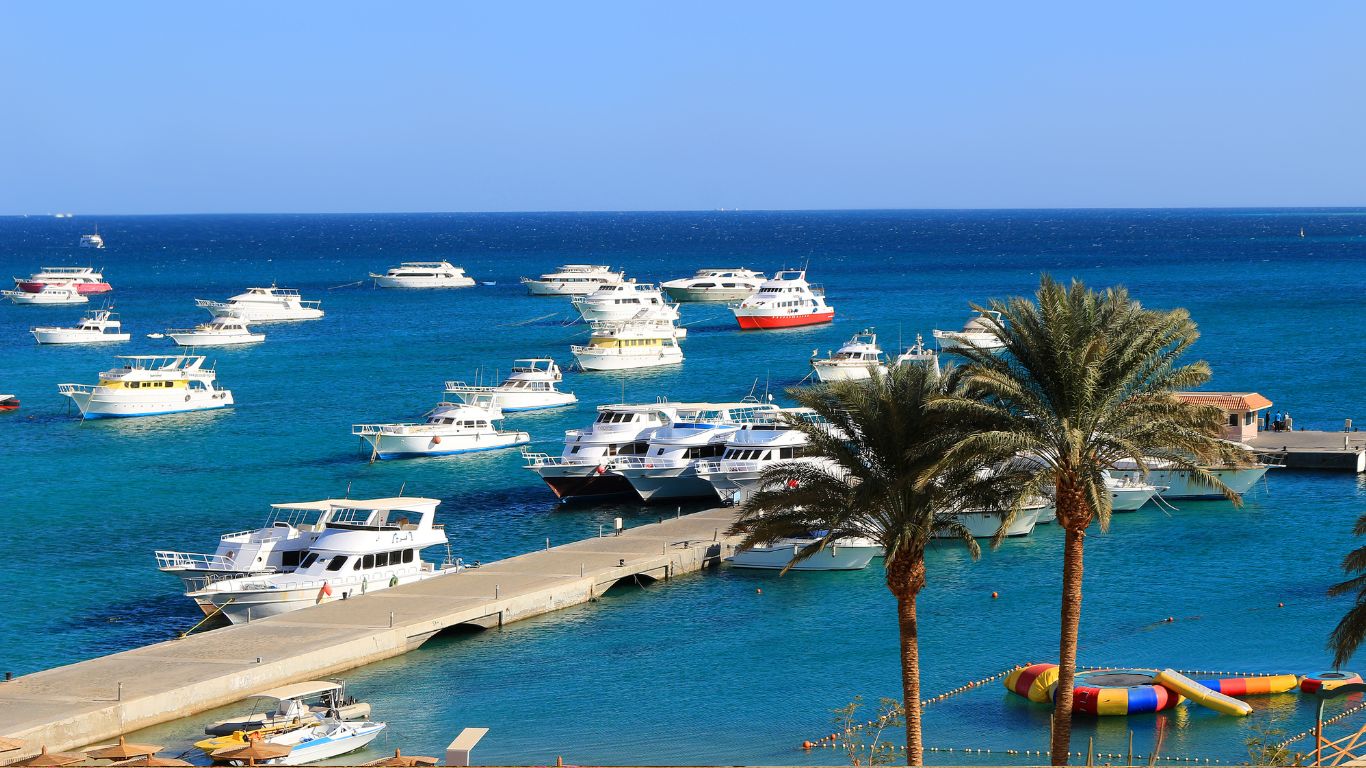
Yes, and the Red Sea coast is particularly well suited to extended winter stays.
Hurghada and El Gouna have year-round populations rather than functioning only as seasonal resorts. Supermarkets, pharmacies, hospitals, restaurants, cafés, gyms, delivery services, banks, telecommunications shops, maintenance companies, and international communities continue operating throughout the winter.
The biggest advantage, however, is climate.
While much of Northern and Western Europe is moving into its coldest and darkest part of the year, daytime temperatures around Hurghada typically average approximately 30°C in October, 27°C in November, 23°C in December, 21°C in January, 22°C in February, 25°C in March, and 28°C in April.
El Gouna follows an almost identical seasonal pattern, with typical daytime highs of around 29°C in October, 26°C in November, 22°C in December, 21°C in January, 22°C in February, 24°C in March, and 28°C by April.
That makes the October-to-April period almost the reverse of a Northern European winter.
Instead of planning your life around central heating, you start planning it around which café terrace gets the afternoon sun.
Winter in Hurghada: October to April Weather Month by Month
For snowbirds, looking only at an annual average temperature is not particularly useful. October on the Red Sea feels very different from January, and March feels different again.
Here is the practical seasonal picture.
Month
Typical Daytime High
Typical Night Temperature
Avg. Sea Temperature
What It Feels Like
October
~30°C
~23°C
~27.5°C
Almost perfect beach weather
November
~27°C
~19°C
~26.3°C
Warm days and comfortable evenings
December
~23°C
~15°C
~24.6°C
Mild, sunny winter weather
January
~21°C
~13°C
~23.2°C
Coolest month, especially after sunset
February
~22°C
~14°C
~22.6°C
Mild but sometimes windy
March
~25°C
~17°C
~22.5°C
Excellent outdoor weather
April
~28°C
~19°C
~23.2°C
Warm spring conditions return
Hurghada's climate data shows remarkably low rainfall and long periods of sunshine throughout the year. The Red Sea also retains heat well into winter: average sea temperatures remain around 23°C even in January and approximately 22.5°C in March.
October: Possibly the Best Arrival Month
If your schedule is flexible, October is an excellent time to begin a Red Sea winter.
The fierce summer heat has started to retreat, but the sea is still extremely warm. Average sea temperatures around Hurghada remain close to 27.5°C during October.
You can swim comfortably, eat outdoors after sunset, dive, snorkel, walk along the marina, and spend large portions of the day outside.
For snowbirds planning five or six months in Egypt, arriving during October also gives you time to settle into your apartment and neighbourhood before the core winter season.
November: Warm Without the Summer Furnace
November is one of the easiest months for outdoor living.
Daytime temperatures remain around the high 20s, while evenings become pleasantly cooler. The Red Sea itself averages approximately 26°C around Hurghada.
For anyone who finds Southern European summers too hot but Northern European winters too cold, November occupies a very comfortable middle ground.
December: Winter Arrives, Egyptian Style
By December, you will notice the seasonal change.
You may want a light jacket in the evenings, particularly in exposed coastal locations, but sunny daytime conditions are still common.
This is also when your choice of apartment becomes more important.
A south- or west-facing balcony with good sun exposure can feel very different from a shaded ground-floor apartment. If you are staying for several months rather than a week, orientation suddenly matters.
January: The Coolest Month
January is normally the coolest part of the Red Sea winter.
Daytime highs around Hurghada average roughly 21°C, while average lows can fall toward 13°C.
That does not mean European-style winter.
Sunny afternoons can still be wonderfully comfortable, but evenings and windy days may require a jumper or jacket.
One mistake first-time long-stay visitors make is assuming that because they are going to Egypt, they need nothing except summer clothing. Pack layers.
February: Sunshine With a Breeze
February begins the gradual transition toward spring.
Temperatures rise slightly, but wind can influence how warm it actually feels, particularly near beaches, marinas, and exposed resort areas.
For swimmers and divers, the sea remains around 22–23°C. Some people happily swim at those temperatures, while others will prefer heated pools or a wetsuit.
March: One of the Best Lifestyle Months
March brings warmer afternoons without summer heat.
For people who enjoy walking, cycling, golf, outdoor cafés, desert trips, diving, and exploring the coast, it is arguably one of the most comfortable months of the year.
April: Winter Is Officially Over
By April, daytime highs are heading toward approximately 28°C.
Your six-month escape from European winter may suddenly start feeling distinctly summery.
For October-to-April snowbirds, this makes departure slightly cruel. Europe may only just be waking up from winter while Hurghada is already back in sandals-and-air-conditioning territory.
Hurghada or El Gouna: Which Is Better for a Winter Stay?
This is probably the most important decision you will make after deciding to spend winter on Egypt’s Red Sea coast.
Hurghada and El Gouna are geographically close, but they offer very different long-stay lifestyles.
Choose Hurghada for Convenience, Choice and Lower Living Costs
Hurghada is the larger and more varied option.
Instead of one master-planned community, the city contains multiple neighbourhoods ranging from busy central districts to quieter residential and resort areas.
That gives snowbirds a much broader range of apartment prices, supermarkets, restaurants, pharmacies, hospitals, gyms, cafés, services, and transportation options.
Hurghada tends to suit people who want to live more independently rather than remaining inside a resort environment.
It can also be significantly more economical.
Current Red Sea Listings inventory demonstrates how wide the market can be. At the time of writing, listings include a three-bedroom property in Al Ahyaa at around €420 per month, while higher-end long-term properties elsewhere along the coast can move well above €1,000 per month. Live inventory changes continually, so these should be treated as examples rather than fixed market averages.
Choose El Gouna for a More Managed Lifestyle

El Gouna operates differently.
It is a master-planned coastal town with marinas, lagoons, beaches, restaurants, cafés, sports facilities, healthcare, and carefully maintained residential communities.
For a first-time snowbird who wants a polished, relatively self-contained environment, it can make the transition to spending several months in Egypt easier.
You generally pay more for that convenience.
Current long-term listings on Red Sea Listings illustrate the difference. Examples include an apartment in Mangroovy around €1,000 per month, a townhouse around €1,600 per month, and larger properties around Ancient Hill or the marina reaching approximately €2,000 per month.
The premium buys more than square metres. You are also paying for location, infrastructure, landscaping, security, community management, proximity to beaches and lagoons, and easy access to restaurants and leisure facilities.
Best Areas for Long-Term Rentals in Hurghada
Hurghada is not one single rental market. Choosing the correct district can have a larger impact on your winter than choosing between two similar apartments.
El Kawther
El Kawther is one of the most practical choices for longer stays.
It has supermarkets, cafés, restaurants, gyms, pharmacies, medical services, and plenty of residential apartment buildings.
For retirees who want daily conveniences within relatively easy reach and remote workers who do not need to live inside a resort, El Kawther deserves serious consideration.
El Mamsha
The Mamsha area is attractive for snowbirds who prioritize being able to walk outside and immediately have restaurants, cafés, shops, and the seafront nearby.
It tends to feel more tourist-oriented and can cost more than purely residential districts, but its accessibility makes everyday life easy.
Hadaba and Sheraton Road
These central areas put you close to the energetic heart of Hurghada.
They work particularly well for people who enjoy restaurants, cafés, nightlife, marina access, and being able to reach much of central Hurghada quickly.
The trade-off can be more traffic and noise depending on the exact street.
Al Ahyaa
North of central Hurghada, Al Ahyaa offers a growing supply of residential and resort developments.
It can deliver more apartment for your budget and suits people who prefer a quieter environment.
However, check the exact location carefully. Some developments are relatively isolated from supermarkets, cafés, and services, meaning regular taxi or car journeys may become part of your routine.
Magawish
Magawish is popular with residents seeking more space and a calmer neighbourhood south of central Hurghada.
It can work particularly well for couples, families, and longer-stay residents who are happy to rely more on taxis or private transport.
Best Long-Term Rental Communities in El Gouna
El Gouna operates on a more premium rental scale, but it also offers several distinct lifestyle choices.
Mangroovy appeals strongly to beach-focused residents, while marina communities suit anyone wanting restaurants, boats, cafés, and social life within walking distance.
Ancient Sands attracts residents seeking quieter upscale surroundings, while newer communities can offer modern interiors, pools, landscaping, and a more residential atmosphere.
The important question is not simply, “Which El Gouna community is best?”
It is, “What do I want my normal winter day to look like?”
If you imagine walking downstairs for coffee and dinner, prioritize central locations.
If you imagine reading beside a lagoon, working remotely from your apartment, swimming, and occasionally going into Downtown or the marina, a quieter residential community may suit you better.
How Much Does a Winter in Hurghada Cost in 2026/2027?
This is where the Red Sea becomes particularly interesting for long-stay Europeans.
Housing is normally the largest variable.
Independent 2026 cost-of-living estimates place a comfortable furnished one-bedroom apartment in Hurghada broadly around the €300–€500-equivalent range depending on location and standard, with premium coastal or resort properties moving considerably higher.
Current market data also shows significant differences between central Hurghada, residential districts, Sahl Hasheesh, and El Gouna. Premium resort locations can cost several times as much as a straightforward apartment in a local residential district.
A sensible 2026/2027 planning budget looks approximately like this:
Monthly Expense
Budget Hurghada
Comfortable Hurghada
Premium / El Gouna
Furnished rent
€250–€400
€400–€700
€700–€2,000+
Electricity, water & utilities
€20–€60
€30–€80
€50–€120+
Internet & mobile
€15–€35
€20–€45
€25–€60
Groceries
€120–€200
€180–€300
€250–€400
Restaurants & cafés
€80–€150
€150–€300
€250–€500+
Local transport
€40–€80
€60–€120
€80–€200
Leisure / gym / activities
€40–€100
€100–€250
€200–€500+
These figures should be treated as planning ranges rather than quotations. Currency movements, imported products, electricity consumption, apartment standard, and winter rental demand can all alter actual spending.
A Realistic Monthly Budget for One Person
A single person living relatively simply in Hurghada could reasonably target approximately €600–€850 per month.
For a more comfortable expat lifestyle with a better apartment, restaurants, taxis, gym membership, occasional excursions, and imported groceries, approximately €900–€1,500 per month provides considerably more flexibility.
Independent 2026 market estimates broadly support these ranges, with comfortable single-person budgets commonly placed around €800–€1,500 depending heavily on accommodation and lifestyle.
A Realistic Monthly Budget for a Couple
For a couple sharing one apartment, many expenses do not double.
A comfortable Hurghada winter budget may therefore fall around €1,200–€2,000 per month, while couples choosing premium El Gouna accommodation, frequent dining, golf, diving, resort facilities, or regular excursions should budget considerably more.
What About Electricity and Utility Costs?
Utility bills in Hurghada are usually modest by Western European standards, but there is one very important variable: air conditioning.
During the core winter months, air-conditioning use usually falls dramatically compared with summer, which helps keep electricity consumption low.
Current crowd-sourced Hurghada data places basic utilities for an 85 m² apartment at roughly EGP 1,300 per month on average, although reported bills vary significantly according to consumption. Broadband internet is reported around EGP 486 per month on average.
Do not assume these costs are automatically included in your rent.
Before signing a long-term agreement, establish exactly who pays for electricity, water, internet, gas, compound charges, building maintenance, cleaning, and any additional resort fees.
A cheap apartment can become less cheap surprisingly quickly when five separate monthly charges emerge from behind the curtains.
Internet and Remote Work on the Red Sea Coast
Hurghada and El Gouna increasingly attract remote professionals who combine work with a warmer winter lifestyle.
For ordinary browsing, email, video conferencing, and cloud-based office work, many apartments provide adequate fixed internet.
However, remote workers should verify the connection rather than trusting the phrase “high-speed Wi-Fi” in a property description.
Ask for an actual speed test from the apartment if internet reliability is critical.
A mobile data SIM also makes an inexpensive backup connection. For anyone whose income depends on being online at a particular hour, having both fixed internet and mobile data is the safer setup.
When comparing apartments, also look beyond raw internet speed.
A proper table or desk, comfortable chair, natural daylight, quiet bedroom separation, and a balcony can transform a three-month remote-working stay.
Healthcare in Hurghada and El Gouna
Healthcare access is another reason the Hurghada–El Gouna area works better for long stays than a remote beach destination.
Hurghada has both private and government hospitals. The UK government's list of medical facilities includes several private hospitals in the city as well as government facilities.
El Gouna has its own private hospital providing year-round services. El Gouna Hospital reports a 24-hour emergency department, inpatient care, specialist clinics, laboratory and diagnostic services.
For retirees and anyone with existing healthcare requirements, proximity to a suitable hospital or clinic should be part of the apartment decision.
Travel insurance or international medical insurance appropriate for a multi-month stay is also strongly recommended. Verify what your policy covers before departure, particularly outpatient care, prescription medication, hospitalization, evacuation, and pre-existing conditions.
If you take regular prescription medication, investigate availability in Egypt before arriving and travel with appropriate documentation.
Visa Planning for a Three-to-Six-Month Stay
Accommodation may be easy to arrange for six months. Immigration rules require more planning.
Egypt's official e-Visa system currently lists tourism e-Visas for eligible nationalities and charges US$30 for a single-entry tourist visa and US$65 for a multiple-entry tourist visa. Applicants are instructed to submit an e-Visa application at least seven days before departure.
However, someone planning to remain in Egypt for three to six months should not assume that obtaining an ordinary tourist e-Visa automatically covers the entire intended stay.
Your nationality, visa type, permitted stay, number of entries, and any extension or residency requirements need to be checked before travel.
Use Egypt's official e-Visa portal and, where necessary, confirm current requirements with the relevant Egyptian consular or immigration authority.
Long stays are entirely possible, but visa planning should be done before you commit to a non-refundable multi-month rental.
How to Choose a Winter Apartment You Will Actually Enjoy for Six Months
Holiday-rental priorities and long-term-rental priorities are surprisingly different.
For seven nights, a spectacular sea view can forgive almost anything.
For six months, you will care much more about the washing machine.
Before committing to a winter rental, inspect or verify practical details including: reliable hot water, internet speed, mattress quality, kitchen equipment, washing machine, storage, balcony orientation, heating or air-conditioning functions, building lift, nearby supermarket, noise levels, security, water pressure, electricity meter arrangement, maintenance response, and exactly which utility bills are included.
You should also clarify the security deposit, payment currency, payment schedule, cancellation terms, maintenance responsibilities, guest rules, pets if relevant, and what happens if equipment fails during your stay.
Should You Book a Holiday Rental or a Long-Term Rental?
If you are staying for three months or longer, a proper long-term rental usually makes more financial sense than repeatedly booking nightly accommodation.
The difference can become significant.
Nightly and weekly holiday rentals are priced around tourism demand, cleaning cycles, booking-platform costs, and short-stay convenience.
Long-term rentals are normally priced around occupancy stability.
An owner who knows the property will remain occupied by one responsible tenant from November through March may accept a completely different monthly structure from someone renting the apartment for Christmas week.
Red Sea Listings separates long-term rentals from holiday accommodation, making it easier to compare properties designed for extended stays rather than trying to negotiate a winter lease from nightly pricing.
Browse Long-Term Rentals on Red Sea Listings
When Should You Book Your 2026/2027 Winter Rental?
Do not wait until the first cold week in Europe.
The most desirable winter apartments combine several attributes: good location, realistic monthly pricing, pleasant outdoor space, reliable internet, modern furnishing, and a responsive landlord or agency.
Those are exactly the properties long-stay tenants tend to compete for.
For a stay beginning in October or November 2026, starting your search well before departure gives you a better chance of comparing several properties instead of taking whatever remains.
This matters even more in premium El Gouna communities, where the supply of genuinely attractive multi-month rentals can be narrower.
If possible, compare the total seasonal cost rather than only the advertised monthly figure.
A €550 apartment with utilities, Wi-Fi, and maintenance included may ultimately cost less than a €450 apartment where everything is billed separately.
What Does Three Months on the Red Sea Cost?
Consider a comfortable single snowbird renting in Hurghada.
At approximately €500 per month for accommodation and another €500–€700 for food, utilities, transportation, cafés, activities, mobile service, and everyday spending, a comfortable three-month stay might land around €3,000–€3,600, excluding flights, insurance, visa costs, major excursions, and unusual medical expenses.
A more economical resident could spend less.
A premium El Gouna resident could spend considerably more.
The point is not that Egypt has one magic monthly figure.
The advantage is flexibility.
You can build a winter around a modest furnished Hurghada apartment or around a lagoon-front El Gouna property with resort facilities. Both exist within the same coastal region.
What Does Six Months on the Red Sea Cost?
For a six-month October-to-April stay, housing becomes the key negotiation.
Even a €100 difference in monthly rent becomes €600 across the season.
That makes it worthwhile to compare properties carefully rather than immediately selecting the most visually impressive listing.
A cost-conscious six-month Hurghada stay could potentially remain below €5,000–€6,000 in local living expenses, while a comfortable expat lifestyle may sit closer to €6,000–€9,000+.
Premium accommodation, frequent dining, diving, golf, car hire, and an El Gouna address can push the seasonal budget substantially higher.
These are planning examples, not fixed packages. Your apartment will determine more of the final figure than almost any other decision.
Is Hurghada Good for Retirees in Winter?
For many retirees, yes.
The combination of mild weather, comparatively affordable housing, year-round services, private healthcare access, large international communities, restaurants, beaches, and direct or connecting European flights makes Hurghada particularly practical.
The city can also accommodate very different retirement lifestyles.
You can live quietly in a residential neighbourhood, stay inside a managed compound, choose a central apartment where daily errands can be completed on foot, or base yourself beside the sea.
People with mobility considerations should pay particular attention to lifts, pavement conditions, building access, supermarket distance, and reliance on taxis.
A fourth-floor sea-view apartment becomes less charming when the lift stops working.
Is El Gouna Good for Snowbirds?
El Gouna may be one of the easiest Red Sea locations for Europeans who want a long winter stay but do not necessarily want the intensity of a large Egyptian city.
Its biggest strengths are organisation, landscaping, marina and lagoon environments, security, restaurants, leisure facilities, and a strong international population.
Its biggest disadvantage is price.
You can spend dramatically more on accommodation and eating out than you would in residential Hurghada.
For retirees or remote professionals who value a managed environment and can accommodate the higher budget, that premium may be entirely worthwhile.
Can You Swim During Winter in Hurghada?
Yes, although comfort varies by month and by person.
Average sea temperatures remain around 27.5°C in October and 26.3°C in November before gradually falling to roughly 23.2°C in January and approximately 22.5°C in March.
October and November are excellent swimming months.
December remains comfortable for many swimmers.
From January through March, the water is still swimmable, but wind and cooler air temperatures can make getting out of the water feel much colder.
Heated swimming pools become particularly valuable during this period.
If winter swimming matters to you, confirm whether a compound pool is genuinely heated. “Swimming pool” and “heated swimming pool” are two very different January amenities.
Is a Car Necessary?
Not necessarily.
In central Hurghada, many snowbirds manage comfortably using taxis and ride-hailing options alongside walking for nearby errands.
Choosing your location well reduces transportation needs dramatically.
El Gouna also has internal transportation options, although residents who frequently travel between El Gouna and Hurghada may prefer private transport.
A car becomes more useful in outlying areas such as Al Ahyaa, Magawish, Sahl Hasheesh, Makadi, or more isolated compounds.
Before choosing a cheaper apartment far from the centre, calculate what you may spend travelling back and forth several times each week.
What Should You Pack for a Red Sea Winter?
Do not pack for Cairo winter, European winter, or a July beach holiday.
Pack for layers.
Daytime clothing can remain light for much of the season, but December through February evenings can feel cool, particularly when the wind picks up.
A light jacket, jumper, long trousers, comfortable walking shoes, sun protection, swimwear, and warmer clothing for winter evenings should all earn space in the suitcase.
Sun protection remains important throughout the season. Winter sunshine on the Red Sea is still Egyptian sunshine.
Could You Eventually Buy Instead of Renting Every Winter?
This question often appears during the second or third long stay.
If you begin returning to Hurghada or El Gouna for four to six months every year, purchasing an apartment can eventually become worth investigating.
Instead of repeatedly paying seasonal rent, some snowbirds choose to own a Red Sea property they can use during winter and potentially rent during periods when they are back in Europe.
Ownership introduces completely different considerations, including purchase costs, legal due diligence, maintenance, property management, resale prospects, and rental income.
But long-term renting first is arguably one of the best ways to discover whether Red Sea ownership actually suits you.
Spend a winter here before buying.
Learn which neighbourhood you genuinely enjoy.
Discover whether you prefer Hurghada or El Gouna.
Find out whether you want a marina, a quiet compound, a city apartment, a private beach, or simply a sunny balcony above a good supermarket.
Three months of ordinary daily life can teach you more than twenty property viewings.
Frequently Asked Questions About Spending Winter in Hurghada and El Gouna
What is the best month to arrive in Hurghada for winter?
October and November are excellent arrival months because temperatures are warm without the peak summer heat, while the Red Sea remains particularly warm. October sea temperatures around Hurghada average approximately 27.5°C.
How cold does Hurghada get in January?
January is typically the coolest month. Average daytime highs are around 20–21°C, with average lows around 13°C. Sunny afternoons can feel warm, but jackets or jumpers are useful during evenings and windy periods.
How much is a long-term rental in Hurghada?
Prices vary considerably by neighbourhood, apartment size, condition, view, compound facilities, furnishing, season, and lease duration. Current Red Sea Listings inventory includes Hurghada-area long-term properties from several hundred euros per month, while premium resort accommodation can exceed €1,000 monthly.
Is El Gouna more expensive than Hurghada?
Generally, yes. El Gouna is a premium master-planned destination, and long-term rents commonly exceed comparable residential Hurghada prices. Current Red Sea Listings examples range from approximately €1,000 per month for some apartments to €1,600–€2,000 for larger or more premium properties.
Can remote workers live in Hurghada during winter?
Yes. Many properties offer fixed internet, mobile data is readily available, and the city provides cafés, services, supermarkets, gyms, restaurants, and other infrastructure necessary for extended living. Remote workers should verify actual apartment internet speeds before signing a lease.
Is healthcare available for foreign residents?
Yes. Hurghada has multiple private and government hospitals, while El Gouna has its own private hospital with emergency, inpatient, diagnostic, and specialist services. Appropriate travel or international health insurance remains advisable.
Can I stay in Egypt for six months on a tourist visa?
Do not assume a standard tourist visa automatically authorizes one continuous six-month stay. Visa conditions depend on nationality, visa type, permitted stay, and immigration requirements. Check Egypt's official e-Visa portal and current immigration rules before committing to a long rental. The official portal currently lists tourist e-Visa fees of $30 single-entry and $65 multiple-entry.
Is Hurghada cheaper than spending winter in Spain or Portugal?
For many snowbirds, housing, restaurants, local transportation, and services can be considerably cheaper in Hurghada. The actual saving depends heavily on apartment choice and lifestyle, particularly if comparing residential Hurghada with premium El Gouna accommodation.
Make the Red Sea Your Home This Winter
A winter escape does not have to mean two expensive weeks inside an all-inclusive hotel.
For the 2026/2027 season, Hurghada and El Gouna offer the possibility of something much more interesting: living beside the Red Sea for long enough that the destination stops feeling like a holiday and starts feeling like home.
Spend October swimming in warm water.
Work from a sunny balcony in November.
Eat lunch outdoors in December.
Watch friends back home scrape ice from their windscreens in January.
Walk along the marina in February.
Dive or explore the desert in March.
And by April, return to Europe just as spring finally arrives.
Whether your ideal winter home is an affordable furnished apartment in Hurghada, a quiet residential compound, or a premium lagoon-side property in El Gouna, choosing the right long-term rental is what turns the idea into a practical plan.
Start exploring long-term rentals on Red Sea Listings and compare available homes in Hurghada, El Gouna, Sahl Hasheesh, and communities across Egypt’s Red Sea coast for the 2026/2027 winter season.