Best Months to Visit the Red Sea: Weather & Rental Guide
A month-by-month guide to visiting Egypt’s Red Sea coast, covering temperatures, sea conditions, diving, wind sports, crowds, rental prices and the best time to book accommodation.
The weather forecast for Egypt's Red Sea coast is wonderfully simple: sunny. Then sunny again. Then, for a bit of variety, sunny with a light breeze. Rain turns up on a sort of "once in a blue moon, and usually just to say hello" basis, which is a refreshing change if you live somewhere that treats an umbrella as a body part.
So the real question is not "will it be nice?" but "which kind of nice do I want?" Do you want a sea that feels like a warm bath, or a promenade stroll in a t-shirt while your friends back home scrape ice off the car? Do you want the quiet, cheap weeks, or the lively, pricey ones? And if you are planning to book a holiday rental, when do you pull the trigger so you get the flat you actually want?
Let's go month by month, with real numbers, a couple of jokes, and a few opinions we are happy to defend at dinner.
The short answer, for people in a hurry
If you want one window, take early November to mid-April. That is the stretch Champion Traveler picks as the best overall for Hurghada: comfortable temperatures, thinner crowds and better deals. If you care more about the sea than the air, September and October are hard to beat, because the water is still around 27°C. If you kitesurf or windsurf, you will want to be here in spring or early autumn. And if you have school-age children and no choice about dates, summer works perfectly well, as long as you treat the middle of the day as a time for the pool and the air conditioning, not for sightseeing.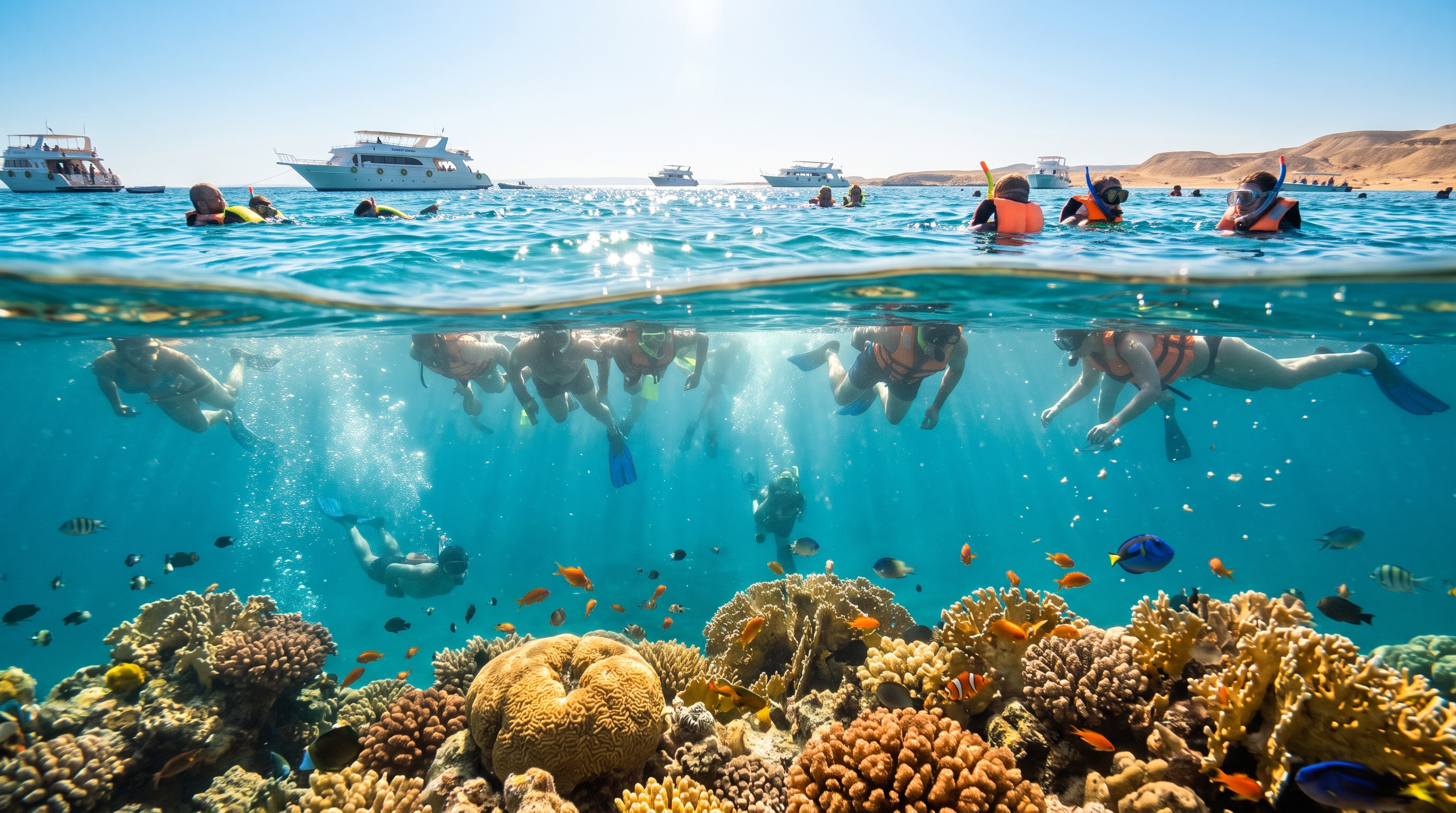
The numbers: Hurghada month by month
Hurghada is the reference point for the coast, and the other places we cover (El Gouna, Sahl Hasheesh, Makadi Bay and Soma Bay) sit within a handful of degrees of it. These climate averages come from Weather2Travel's Hurghada climate table:
Month
Day high
Night low
Sea
Sun hours per day
January
21°C
10°C
23°C
9
February
22°C
11°C
22°C
10
March
25°C
14°C
22°C
10
April
28°C
17°C
23°C
10
May
31°C
21°C
24°C
11
June
33°C
24°C
26°C
12
July
34°C
25°C
27°C
13
August
34°C
26°C
28°C
12
September
32°C
24°C
27°C
11
October
30°C
20°C
27°C
10
November
27°C
16°C
26°C
9
December
23°C
12°C
24°C
9
Two things jump out. First, the sunshine never drops below nine hours a day, even in the "grey" months. Second, the sea is warmer than you might expect for most of the year: it only dips to 22°C in February and March, which is about what the Mediterranean manages in a good August. The same table shows essentially no rain, with about 1 mm in December and nothing at all in the other months.
December to February: the cosy months
Winter on the Red Sea is the season of the t-shirt-and-light-jumper. Days sit around 21 to 23°C, evenings drop to 10 to 12°C, and you will want a layer for sitting outside after dinner. It is a dry, bright, gentle kind of cold, nothing like a British February where the sky is basically a damp flannel.
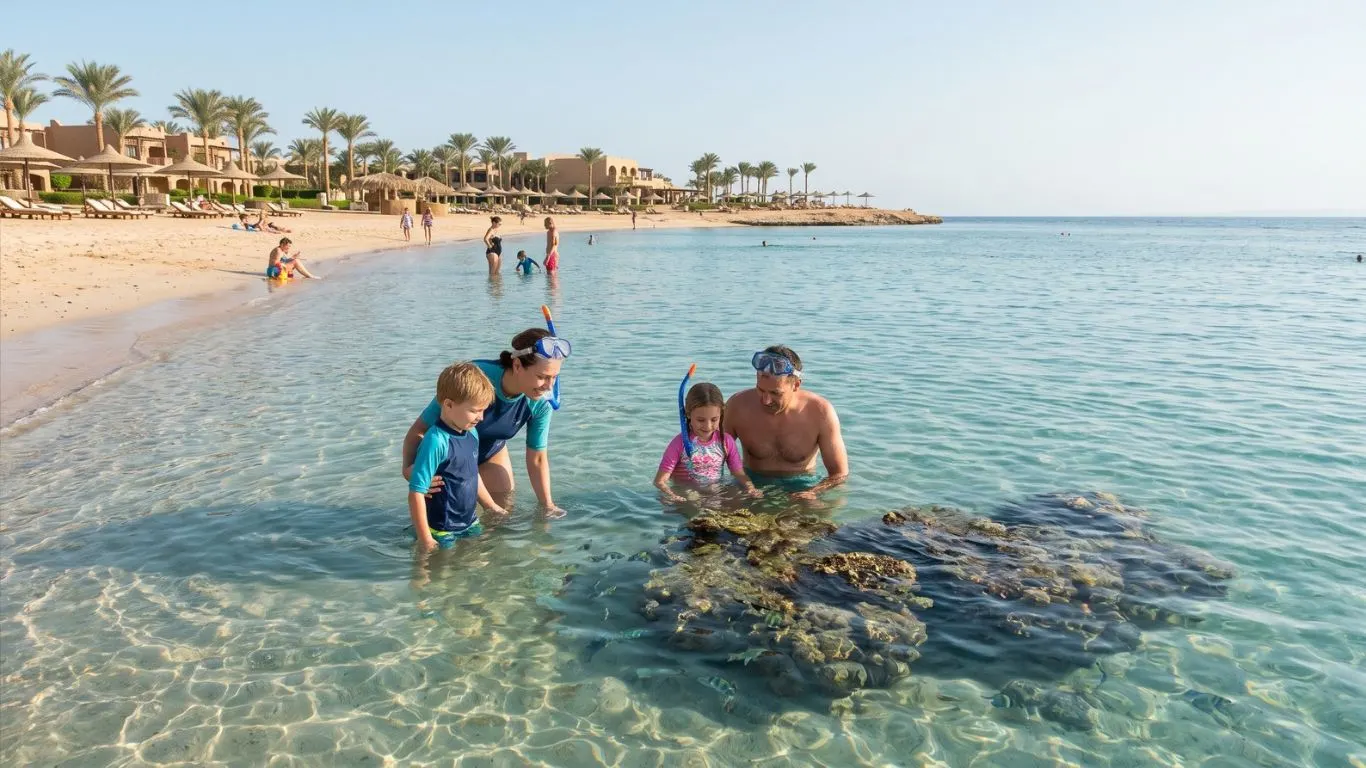
The sea is the part that needs managing. At 22 to 23°C it is perfectly swimmable if you are the brisk sort, and lovely if you are a snorkeller in a wetsuit. Champion Traveler suggests a 5 mm wetsuit for divers in these months and notes that underwater visibility often exceeds 30 metres, which is one of the quiet perks of winter diving. If you are bringing children who like to splash for six hours straight, check whether your rental has a heated pool, because an unheated one in January can feel more "polar plunge" than "holiday".
This is the season for snowbirds and remote workers, and there is a small bump in demand around Christmas and New Year. If that is your plan, our guide to what a three-month winter stay really costs in Hurghada will help you work out whether renting for the season beats renting week by week. As a rule of thumb that is ours, not an official figure: book the Christmas and New Year fortnight as early as you can, ideally by the autumn, and be more relaxed about mid-January and February.
March to May: the windy, glorious middle
Spring is arguably the sweet spot for people who like to do things. Highs climb from 25°C in March to 31°C in May, nights stay mild, and the sea creeps up from 22°C to 24°C. It is warm enough for long beach days and not yet hot enough to make you negotiate with the sun.
It is also when the wind arrives. A windsurfing guide to Hurghada lists March to June as the best wind window, and the same guide says the first 200 metres of the surfers' lagoon is only hip-deep, which is exactly what you want when you are learning and falling off a lot. Champion Traveler also describes spring as the second-busiest season, with prices and boat bookings rising as the weeks go on. Easter is the obvious pressure point: if your dates are fixed around school holidays, book early and expect to pay a premium.
If you are thinking about owning rather than renting, spring is a good time to view properties too. You can walk around a compound at 11am without needing a lie-down, which is more than we can say for August.
June to August: hot, bright and busy
Let's be straightforward about summer: it is hot. Weather2Travel gives daytime highs of 33 to 34°C, while Champion Traveler's seasonal average runs higher, around 37.7°C, with early August touching 39.2°C. Humidity is low, so it is the dry heat of a hairdryer rather than the soggy heat of a sauna, but a hairdryer pointed at your face for eight hours is still a hairdryer.
The reward is the sea. At 26 to 28°C it is as warm as it gets, perfect for long swims, reef snorkelling and children who refuse to get out. Summer is the busiest period, driven by European package holidays and school breaks, so resort prices and boat crowds peak. It also happens to be a fine time for the wind: June is when kitesurfers start getting excited again, and the windsurfing guide puts August back among the good wind months after a lull in July.
The practical rules for summer are simple. Plan your outings for early morning and evening, treat 12 to 4pm as pool and air-conditioning time, and check that every bedroom in your rental has working AC, not just the living room. For families booking in July and August, our rule of thumb is to lock in your rental by spring. The best flats with sea views and a pool are the first to go.
September to November: the sea's best-kept secret
Here is a contrarian opinion: autumn might be the best time to be in the water. The sea sits at 27°C in September and October and is still a very comfortable 26°C in November, while daytime air temperatures ease from 32°C to 27°C. You get summer water with winter-ish air. It is the Goldilocks setting, and your swimming costume will thank you.
Champion Traveler calls late September and October a strong option for divers, and says tourism drops to its lowest levels across the autumn months, with November the quietest and accommodation at its cheapest. That is their read of the pattern rather than a national statistic, and demand does vary by market, so check the dates you care about. But it matches what we hear from owners: autumn is the season where you can negotiate. The windsurfing guide also lists August to October as good wind months, so September and October are a double win for anyone who likes sea and breeze together.
Wind, in one paragraph
If wind is why you are coming, the shorthand is spring (March to June) and late summer into autumn (August to October), with the quieter wind months in between and over winter. Soma Bay and El Gouna are well known for their kite and wind sports, and a rental near the spot saves you the daily cart of kit across town. We cover the lifestyle side in more detail in our guide to living by the wind and the reef, but for dates, think March to June and August to October.
Crowds and prices: a rough picture
Tourism in Egypt is in a strong stretch. According to the Tourism Syndicate's Hamdi Ezz, around 19 million tourists visited in 2025, up 21% on the year before, and he expects the country to pass 20 million by the end of 2026. Early figures from the State Information Service, reported by ATTA, show about 6.1 million arrivals in the first four months of 2026, up 7% from 5.7 million a year earlier. More visitors mean the popular weeks fill up faster.
Here is how we would summarise the year. This is our own simplified picture to help you plan, not published pricing data:
Period
Crowds
Rental prices
Best for
Christmas and New Year
Busy
Highest of the winter
Sun-seekers, families on a break
January and February
Calm
Moderate
Snowbirds, remote workers, retirees
March to May
Busier, Easter peak
Rising
Active holidays, wind sports, viewings
June to August
Busiest
Highest overall
Families, beach and pool holidays
September to November
Quietest, according to Champion Traveler
Cheapest, on the same source
Divers, couples, bargain hunters
When to book your holiday rental
Here are our rules of thumb. They are guidance, not rules carved into a pyramid.
For peak weeks (Christmas, New Year, Easter and July to August), book as early as you can. The flats that photograph well and sit close to the beach are the first to go, and there is little drama more relatable than finding the perfect villa and discovering it is taken from the exact week you wanted.
For the shoulder months, you can wait a little longer, and you get more choice and more room to haggle, particularly if you are staying a month or more. Many owners will happily discount a longer stay because it saves them the hassle of constant check-ins.
For autumn and early winter, last-minute deals are common. If your dates are flexible, this is the time to look at what is available a few weeks out and pounce.
Whatever the month, ask three questions before you pay a deposit: Does every bedroom have air conditioning? Is the pool heated, if you are going in winter? And is the place set up for the lifestyle you came for, with kit storage if you kite and a desk and decent Wi-Fi if you work? Browse our holiday rentals and filter for those, and you will save yourself an awkward conversation on arrival.
If you own (or plan to own) a place here
For owners, the calendar above is a pricing guide. Airbtics, which tracks short-let data, reports a median occupancy of 52% in Hurghada for the year to January 2026. That means a typical listing is empty almost half the time, so the owners who do well are the ones who price smartly: higher for Christmas, Easter and high summer, sharper for the quiet autumn weeks, and generous with discounts on monthly stays to keep the flat busy. Our own platform figure of 12.4% average net yield sits at the upper end of what you should expect, and good calendar management is a large part of how you reach it. If you want the sums done properly, our piece on whether 12.4% is real walks through them line by line.
If you are still deciding where to buy, think about your own favourite month. The person who loves quiet autumn dives might lean towards Sahl Hasheesh or Makadi Bay. The person who lives for wind may look hard at Soma Bay. The person who wants cafés, a marina and company year-round will probably end up in El Gouna. Your best month is a surprisingly good compass.
So, which month is yours?
Snowbird escaping the grey: December to February. Active holidaymaker who wants wind, warm days and a good book: March to May. Family with fixed school dates and a fondness for pools: July and August, with air con on tap. Diver, couple or anyone who likes warm water without the crowds: September to November. And if you cannot decide, remember that the Red Sea is one of the few places where the "wrong" month is still sunny, still warm and still a lot better than your commute.
Ready to pick your dates? Have a look at our holiday rentals in Hurghada and along the coast, or browse properties for sale.if you would like to make your favourite month a permanent fixture. The sea will be here. So will the sunshine.