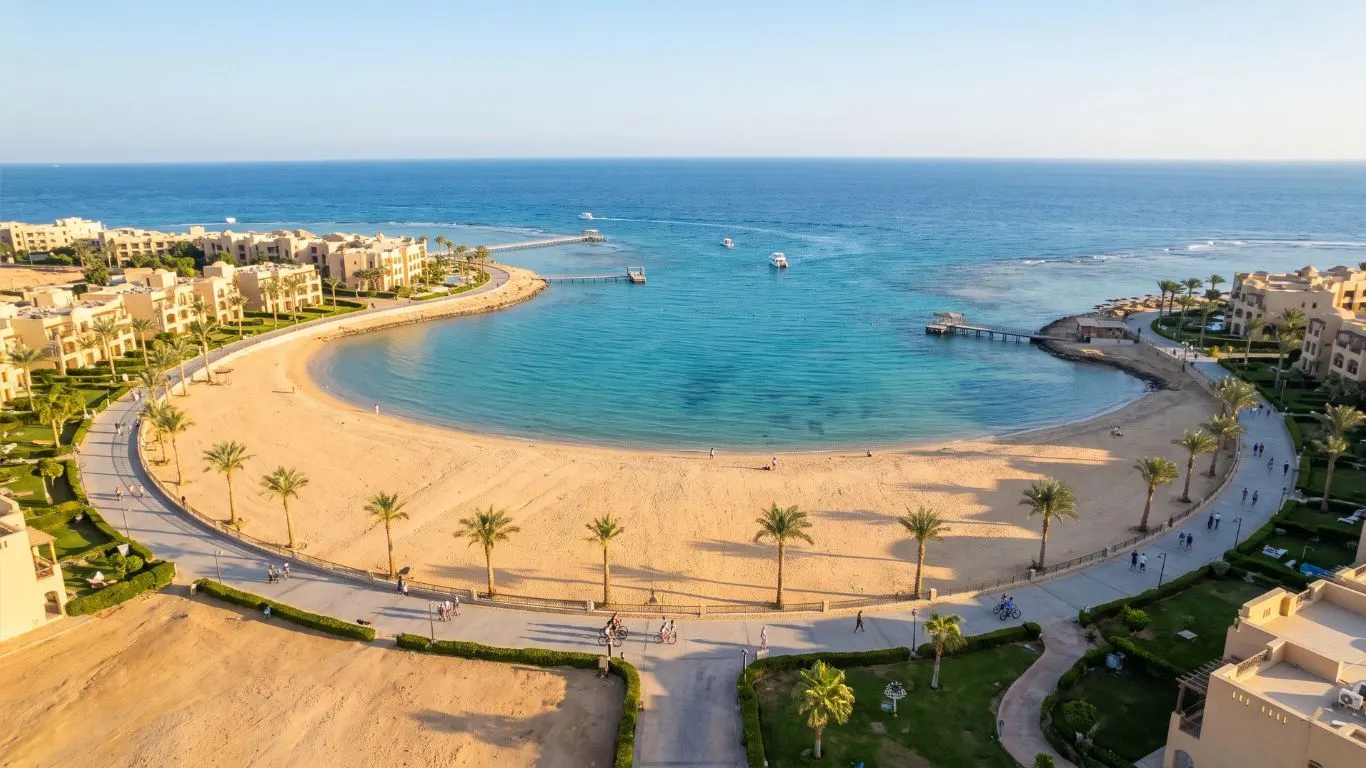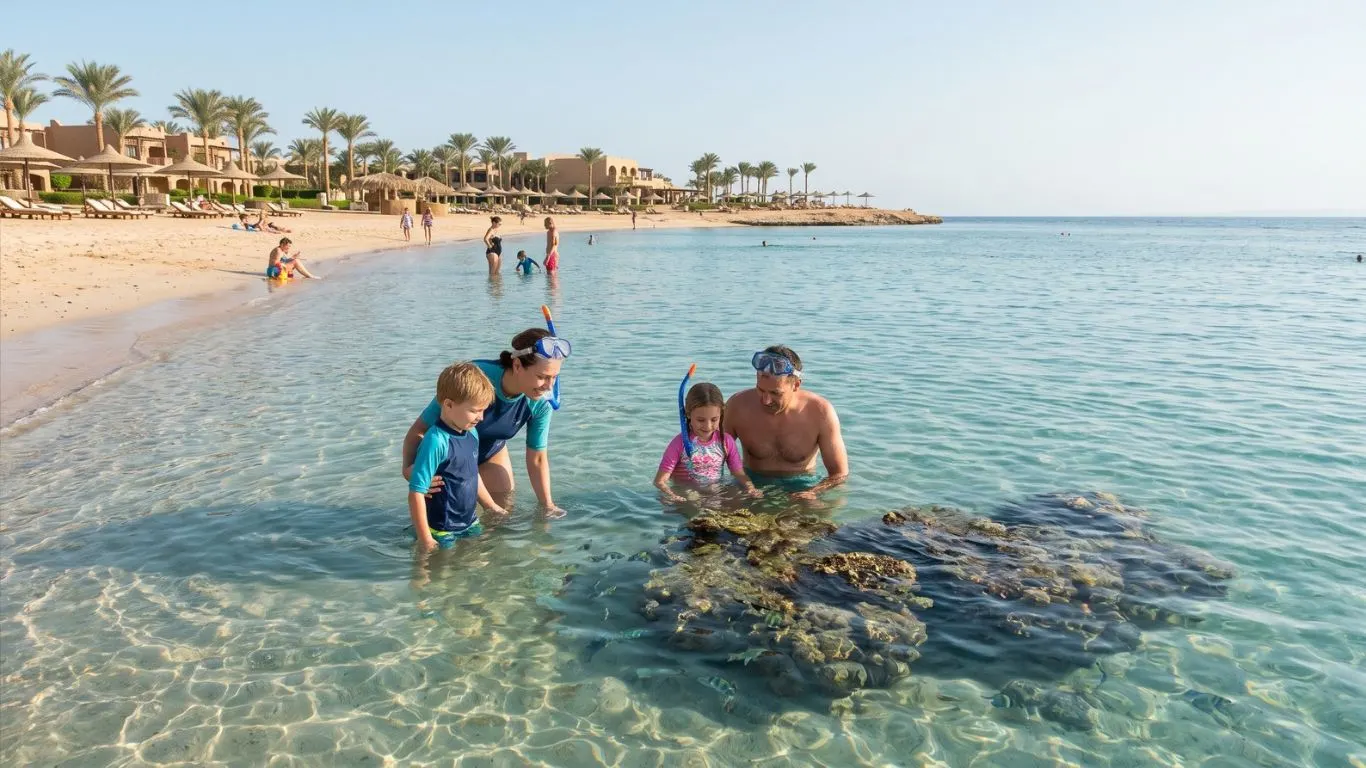
GCC Investor’s Guide to Red Sea Property in Egypt
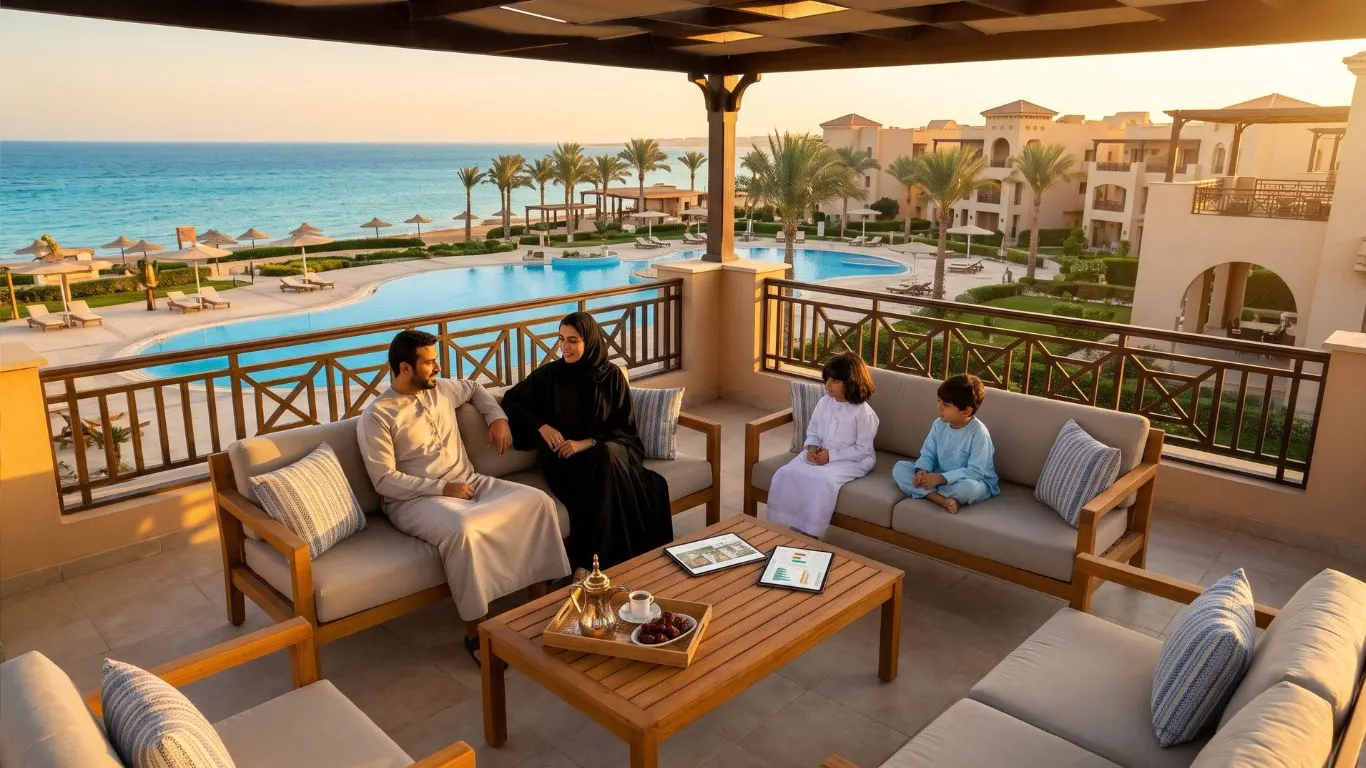
A practical guide for GCC investors considering Red Sea property in Egypt, covering currency exposure, rental yields, instalment plans, foreign ownership rules and where to buy in Hurghada, Sahl Hasheesh, El Gouna and Soma Bay.
Picture a Tuesday in July. The car's steering wheel has strong opinions about your hands, the pavement is hot enough to fry a falafel, and somebody in the family WhatsApp group posts a photo of a turquoise bay with the caption "two and a half hours away". They are not lying. And that, in one slightly sweaty nutshell, is why more and more Gulf families are looking at the Red Sea coast of Egypt, not just for a week in a hotel but for a place of their own.
This guide is for the GCC buyer who is curious but wants numbers before romance: the investor from Riyadh, Kuwait City, Doha, Dubai or Muscat who already knows how a payment plan works and wants to know how this one is different. We will cover where Gulf money is already going in Egypt, what the currency does to your maths, how the yields really compare with Dubai, what the rules say, and which corner of the coast suits which kind of buyer. Kettle on, calculator out.
Gulf money is already in Egypt (just not on this coast)
Let's start with the headline deals, because they set the mood. Abu Dhabi's ADQ is behind the Ras El Hekma development on the Mediterranean, a roughly USD 35 billion project. Qatari Diar, the real estate arm of Qatar's sovereign wealth fund, is expected to invest nearly USD 29.5 billion in Alam El-Roum in northern Matrouh, according to a Reuters report from 19 October 2026, which also notes that Egypt's foreign direct investment rose almost 50% to about USD 18 billion in the 2025/26 fiscal year.
Prefer a wider lens? Ahram Online reported on 1 June 2026 that Gulf-linked investment in Egypt's property sector is estimated at USD 35 to 40 billion, and that the mood is shifting from straight acquisitions to joint ventures with Egyptian developers. Market voices in that piece describe the partnership model as "the strongest and most sustainable" under current conditions.
Notice what those deals have in common: they are on the Mediterranean North Coast, built from scratch, and aimed at summer. The Red Sea is a different animal. It is a string of established resort towns with airports, marinas, reefs and, crucially, a winter that feels like a gift. That is exactly why a Gulf buyer who already has a summer plan in mind may want a second coast for the other half of the year.
Why the Red Sea makes sense for a Gulf buyer
Four reasons keep coming up when Gulf buyers talk about Egypt, and a July 2026 market round-up from JanusHermes lists most of them: lower prices per square metre than the big Gulf cities, long instalment plans with low down payments, cultural and linguistic familiarity, and big-name Gulf-backed projects that make the whole market feel less like a leap of faith.
Add the practical bits. Flights from the Gulf are short, and the time difference is small: Egypt sits on UTC+2, with daylight saving moving it to UTC+3 in summer, so you are within an hour or two of Riyadh, Doha or Dubai. Nobody needs a jet-lag plan. Arabic is the working language, the food is not a negotiation, and the weekend dilemma is simply which airport to leave from. (Check which airlines currently fly direct to Hurghada from your city before you plan around it; schedules change.)
Then there is the climate flip. The Gulf is at its most livable when Egypt's Red Sea is at its most gorgeous: sea around 23 degrees in January, clear skies, the kind of weather that makes you wonder why you ever wore a jacket. Our month-by-month guide to the best months to visit the Red Sea has the full picture; the short version is that the same coast that is merely hot in August is properly lovely from November to April.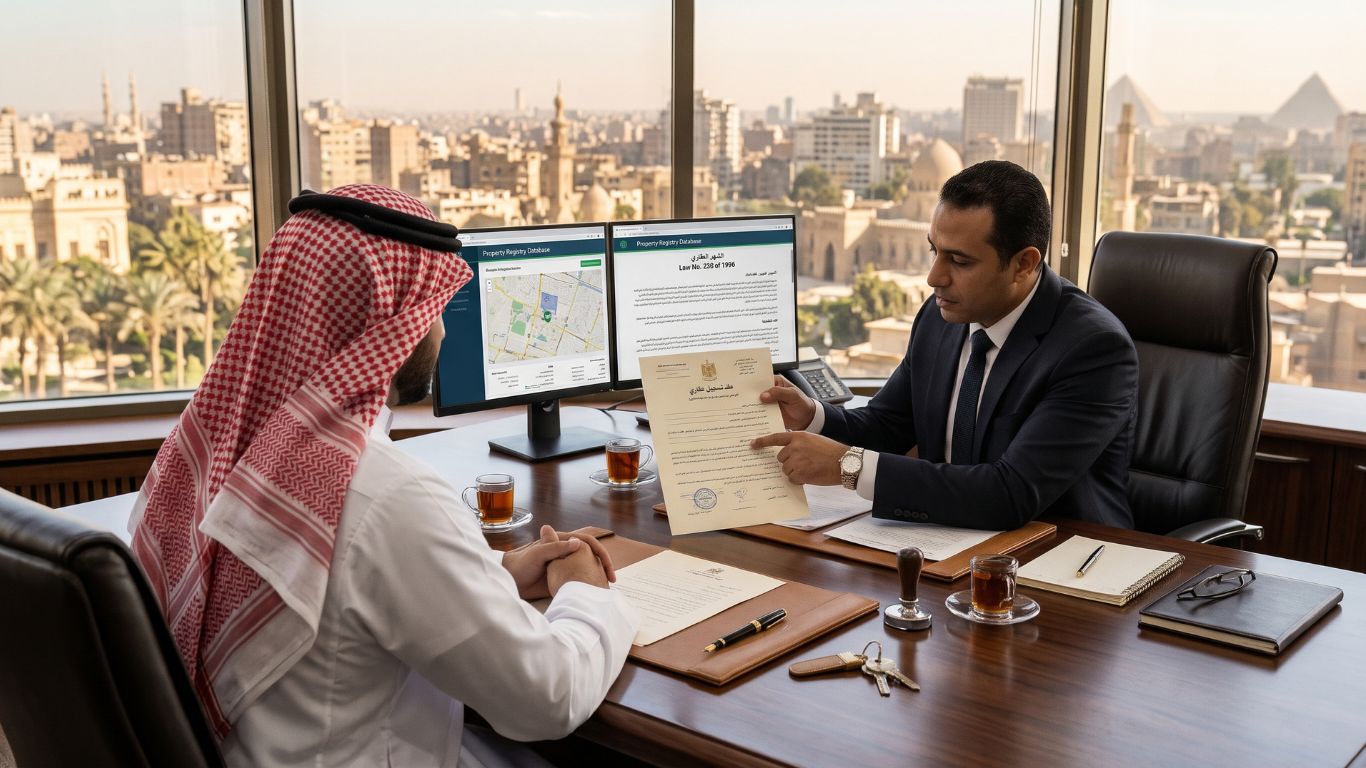
The currency angle: your dirham or riyal against the pound
This is the part where a Gulf buyer has a quiet advantage and a quiet homework assignment. Most Gulf currencies are tied to the US dollar (the Kuwaiti dinar follows a basket), so your money is dollar-stable. The Egyptian pound is not. It was floated on 6 March 2024, and The Rio Times reported in September 2026 that it traded at around EGP 52 to the dollar, after a record low of roughly EGP 54.86 in March 2026.
What does that mean in practice? If you buy in pounds and the pound weakens, your purchase gets cheaper in dollar terms for the instalments you have not yet paid. If it strengthens, those instalments cost more. Neither direction is a plan. It is a variable to price in, and it is the main reason to ask every developer one simple question: are my instalments fixed in pounds or in foreign currency?
There is also a paper-trail rule worth knowing. According to The Rio Times (21 September 2026), Central Bank of Egypt Circular 41, in force since 26 March 2024, requires foreign buyers to show that the price was paid from abroad, in foreign currency, through an authorised bank. Keep the inward-transfer certificate: it is the document that supports taking sale proceeds out later. We walk through the whole process in our guide to sending money to Egypt to buy property, and it is worth reading before you wire a single dirham.
Yields: how Egypt really compares with Dubai
Gulf investors know Dubai's numbers better than anyone, so let's put them side by side without the sales gloss. Global Property Guide puts Dubai's average gross rental yield at 5.53% for Q2 2026, and reminds readers that net yields are typically 1.5 to 2 percentage points lower. Other trackers are more generous: Real Estate Club Dubai, citing REIDIN data for April 2026, shows a blended gross yield of about 6.7%, around 7.1% for apartments and roughly 5% for villas, while noting that annual rent growth slowed from 6.2% in December 2025 to 1.5% in April. Prices climbed faster than rents, which is how yields get squeezed.
Market
Figure
What it is
Dubai, average
5.53% gross
Global Property Guide, Q2 2026
Dubai, same logic after costs
about 3.5% to 4% net
Our arithmetic: gross minus the 1.5 to 2 points Global Property Guide mentions
Dubai apartments
about 7.1% gross
REIDIN data via Real Estate Club Dubai, April 2026
Egypt, national average
7.47% gross
Global Property Guide, Q2 2026
Egypt, same logic after costs
about 5.5% to 6% net
Our arithmetic, same method
Red Sea Listings, platform average
12.4% net
Our own figure across listings: treat it as the upper end of the range
Read that table the way you would read a restaurant menu: the first line is real, the last line is the special of the day. Our platform average of 12.4% net is a genuine number, but it comes from the better-performing holiday lets, and a realistic year for a typical flat sits well below it. In our guide on running the numbers on a Red Sea flat we show a worked example landing near 6% in a normal year. Even at that level, a Red Sea unit is competing with Dubai's net figure rather than trailing it, and it costs a fraction to buy in.
The honest takeaway for a Gulf investor is not "Egypt beats Dubai". It is that Egypt offers a different trade: a lower entry ticket, a longer payment runway and a rental market driven by European winter demand, in exchange for currency risk and a thinner resale market. Dubai offers depth and liquidity. They can sit side by side in a portfolio rather than fight each other.
Payment plans: the feature Gulf buyers love
If you have bought off-plan in the Gulf, the Egyptian version will feel familiar but longer. Nawy's offers page shows typical plans of 5 to 10 percent down and five to ten years to pay, with some going as low as nothing down and stretching to fifteen years. In our explainer on off-plan property in Egypt we worked through an example: a EGP 4 million flat, 10% down, 84 monthly instalments. Cash flow-wise, that is closer to renting than buying.
The catch is delivery risk, as anywhere. Ask for the developer's handover record, ask where your instalments are held, and read the delay clauses before you read the brochure. If you want to browse, our new developments page lists current projects, and off-plan developments in Sahl Hasheesh are the ones most Gulf buyers ask about first.
The rules, in plain words
Egypt's ownership law for foreigners is more relaxed than many people expect. The Real Estate Registry's own guide to buying as a foreigner (15 September 2025) says that foreigners may own up to two properties for personal use, with a total of 4,000 square metres, that deposits at the preliminary agreement typically run 10 to 30 percent, and that registration can take anywhere from three to twelve months. Rental income is taxed, and the registry guide quotes a 10 percent property tax. The seller pays 2.5 percent disposal tax on resale, according to The Rio Times and the legal briefing by Youssry Saleh and Partners on Mondaq.
The single most important sentence in all of this comes from the registry itself: a property is not legally yours until it is registered. Bank transfers and receipts, a lawyer who works for you rather than the developer, and a registered title at the end. Everything else is detail. Our step-by-step buying walkthrough covers the process from contract to keys, and our guide to yearly property tax and running costs shows what you pay once you own.
Which corner of the coast suits which Gulf buyer?
The holiday-home buyer. If the goal is a place the family uses every winter and rents out when it is empty, look at apartments in El Gouna. It is the most established resort town on the coast, with a marina, a lagoon-front lifestyle and a ready-made rental market. It is also the area where the "I would like my teenagers to survive a week without a shopping mall" test is most reliably passed.
The golf and wind buyer. Soma Bay is a private peninsula, roughly 45 km south of Hurghada airport, with golf courses and some of the best kite conditions on the coast. Prices are higher and the stock is thinner, which is exactly the point for buyers who prefer exclusivity. We have a whole piece on living next to the fairway.
The yield buyer. Sahl Hasheesh, with its long beachfront, Old Town promenade and plenty of new launches, is where payment-plan maths works hardest. If you plan to rent out on a managed basis, read our comparison of holiday rentals against long lets first, because it changes how you pick the unit. Browse holiday rentals to see what guests are actually booking.
The family buyer. Makadi Bay is quieter, with a sheltered inner bay and a beginner-friendly reef. It suits families who want the beach to be the plan rather than the backdrop.
The bits that deserve a raised eyebrow
A guide that only says nice things is a brochure. So here are the points where a careful Gulf buyer should slow down. AGBI noted in November 2025 that Egypt has to service close to USD 71 billion of foreign-currency debt over three years and warned that a market built mainly on high-end gated property for foreign buyers carries its own risks. Tourism has also had a bumpy 2026: Egyptian Streets reported that first-quarter arrivals rose 15.6 percent, according to the tourism minister, but April fell roughly 16 percent on regional tensions. A rental investment lives or dies on guests, so watch that line.
None of this is a reason to walk away. It is a reason to buy with a margin: choose a unit that makes sense as a holiday home even in a slow year, treat the rental income as a bonus, and keep a cash buffer for the first two winters.
Seven questions to ask before you pay a deposit
Is the price and every instalment fixed in Egyptian pounds or in foreign currency?
Has the developer delivered a project before, and can I speak to an owner who has the keys?
Who holds my instalments, and is there an escrow or a bank guarantee?
What exactly is "fully finished": air-conditioning, kitchen, wardrobes, or just walls and wiring?
Will the project be registered, and who pays the registration fees?
What are the service charges, and what do they include?
If I want to sell in five years, who are my likely buyers: Europeans, Egyptians, other Gulf investors?
If an answer arrives wrapped in adjectives instead of numbers, you have learned something.
Your move
The Gulf has been betting on Egypt's Mediterranean coast for two years. The Red Sea is the quieter bet: older, calmer, genuinely beautiful and still priced like a place you could actually afford. Browse new developments, shortlist three units across two towns, and ask each seller the seven questions above. Then book a flight, because no spreadsheet has ever managed to describe a January morning on that water. If you own a property on the coast and want Gulf buyers to see it, list it with Red Sea Listings and let the sea do the talking.