How to Avoid Property Scams in Egypt: Buyer Checklist
A practical anti-scam guide for Red Sea property buyers covering fake projects, title fraud, double selling, deposit theft, unverified agents, developer checks, safe payments and a 10-point pre-deposit checklist.
Egypt has been selling impressive structures to visitors for roughly 4,500 years, so it would be a bit rich to act shocked that a few of the ones on offer today do not exist. A glossy render of a lagoon-side villa, a "special price, today only" and a very friendly man on WhatsApp: that combination has parted more than one buyer from a very real deposit.
The good news is that the vast majority of Red Sea deals go through without drama, and the cons that do exist are repetitive. Once you know the six or seven standard plays, you can spot them from the sofa, with a cup of tea, before anyone has asked for a penny. This guide walks you through them, plus the checks that take the guesswork out of buying a property on the Red Sea coast.
First, let's be fair: how risky is it really?
Not hopeless, but you should not switch your brain off either. The independent Global Investments guide to property scams and red flags, last updated in June 2026, rates Egypt's overall fraud risk as "High", with title risk and off-plan risk both high and agent regulation described as weak. The UK government's own buying property in Egypt guidance (updated 14 October 2026) says much the same in politer language: estate agents in Egypt are not regulated, a developer may be under investigation or in dispute with the state authority that allocated the land, and you should not sign anything or hand over money until you have taken independent legal advice.
Notice what is missing from those warnings: panic. The risks are known, they are specific, and they can be checked. That is the whole point of this article.
The six classic cons (and what they look like in real life)
The official Egyptian real estate platform's own blog, in a piece on how to protect yourself from real estate fraud published in September 2025, lists six main types of fraud. We have translated them from official into human.
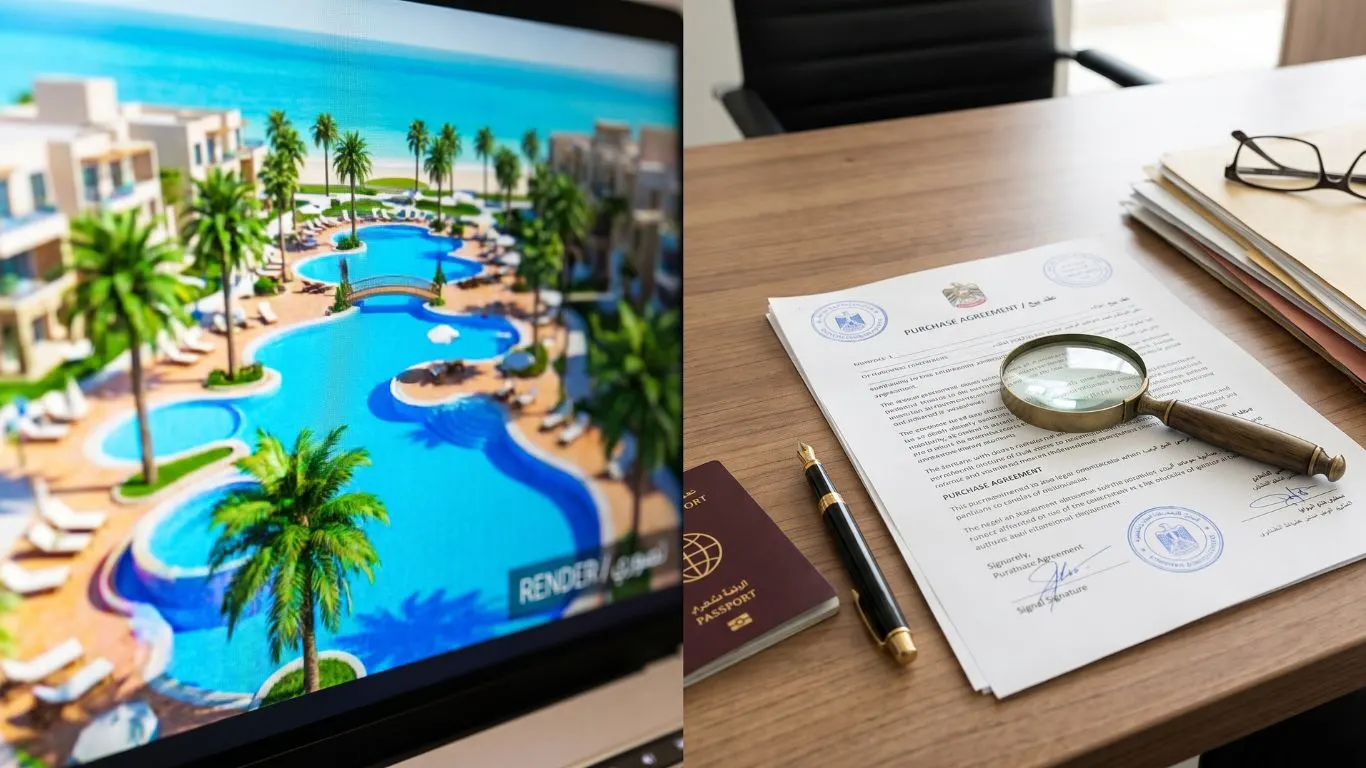
Fake projects. The brochure is gorgeous, the development does not exist, or the seller does not own the land it sits on. If a "new resort" has a stunning website but you cannot find a single construction photo taken by someone who is not selling it, pause.
Title fraud. Someone sells a property they do not legally own. It is the oldest trick in the book, and it is why we keep banging on about checking ownership first.
Double selling. The same flat, sold to two or three people, each convinced they are the lucky one. The one who registers first usually wins, which brings us neatly to rule number one below.
Deposit theft. You pay a "reservation fee" to "hold" a unit, and then the unit, the agent and the phone number all vanish together. Global Investments puts typical reservation deposits in these scams at between €2,000 and €10,000: enough to hurt, small enough that people hesitate to chase it.
Phantom brokers. A charming person with a business card, no licence and no office. In a market where agents are not regulated, a card means nothing; a licence number you can verify means something.
False promises. Handover dates that slip, amenities that never appear, or a developer described as "approved" when it is not. This is less a crime than a habit, and it is the one most holidaymakers-turned-buyers actually meet.
Rule one: a brochure is not a title deed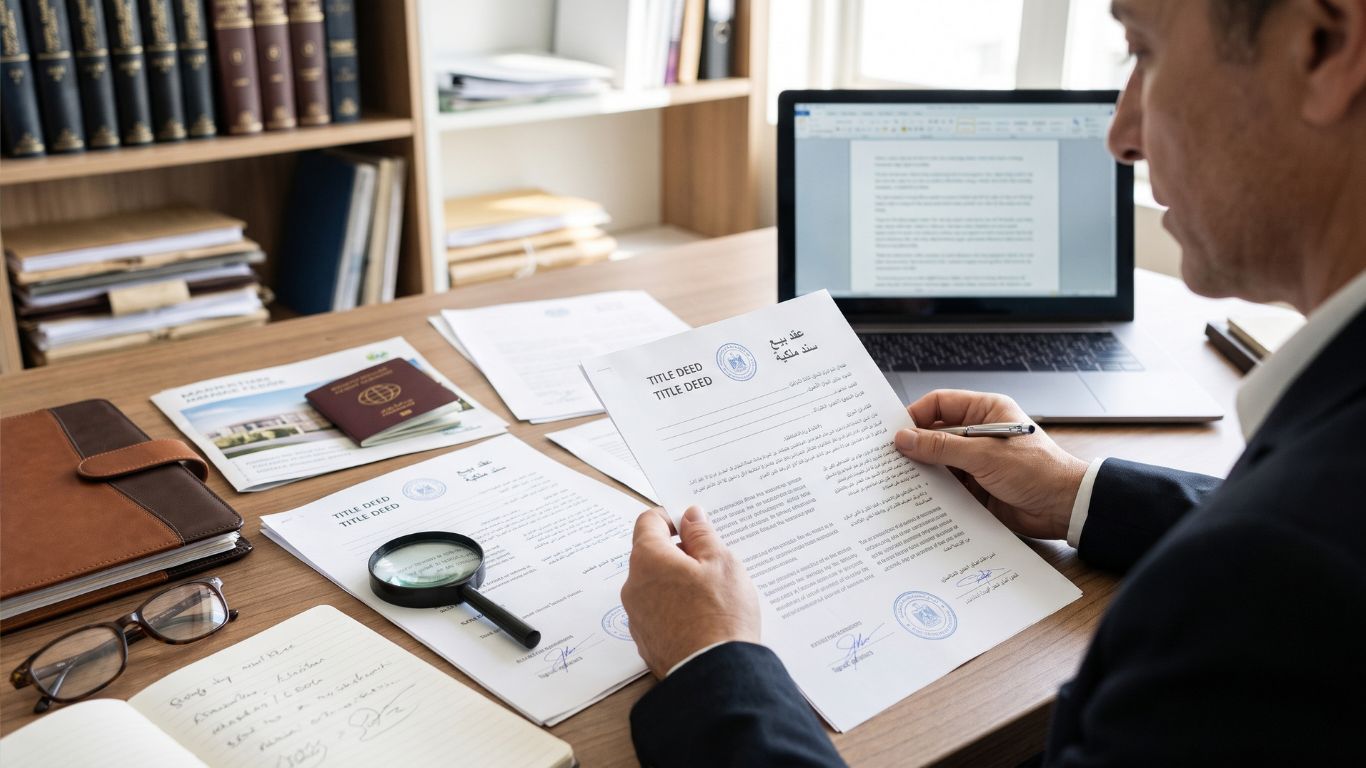
This is the big one. In an August 2026 article on why legal verification matters more than ever, the official Egyptian real estate platform blog is blunt: an advertisement or a sales representative's assurances are not proof of legal ownership, and a private contract is not necessarily the same thing as registered ownership. The blog adds that skipping the checks can mean a lost deposit, competing claims on the property, mortgages nobody told you about, or construction violations that take years to unpick.
The Real Estate Registry's own buying guide makes the same point in simpler words: a property is not legally yours until it is registered. So before the deposit, not after it, ask for the following and have your lawyer check each item against the authorities:
The seller's identity, matched to their documents, and the original ownership papers.
The ownership chain: who owned it before, and on what contract.
Whether the property is registered, or whether there is a legally valid route to registering it.
Any mortgage, lien, seizure or live dispute attached to it.
For a resale: the building licence, and whether the flat you are viewing matches the licensed building (extra floors and enclosed balconies are classics).
For a power of attorney sale: its scope, its validity and the authority of the person using it.
If the seller gets cross when you ask, that is useful information. Honest sellers have the paperwork and are rather proud of it.
Rule two: check the developer, not the logo
Off-plan is where most buyers' money goes first and where most of the horror stories start, because you are buying something that does not yet exist. Our off-plan developments are explained in a separate guide, so here is just the scam-proofing version.
Global Investments suggests working only with established developers with a verified record of completed projects, and, quite sensibly, visiting a finished one and talking to the people who bought there. The UK government's guidance adds that you should pay in instalments tied to construction stages and never the full amount upfront, and that you should confirm the land is actually in the developer's hands, because buying a unit does not automatically mean you receive a share of the land.
It is also worth knowing where the rules are heading. According to Daily News Egypt on 4 October 2026, the Ministry of Housing has drafted a new law for real estate developers. It would require a separate escrow account for every project, with withdrawals tied to verified construction progress and a ban on using the money for other developments, plus two buyer protection funds and public online registers of registered developers, updated monthly. The article stresses the draft is preliminary and still in consultation, so it is not law yet. Treat it as a direction of travel and not a safety net: today, you still have to do the checking yourself.
A practical developer check takes about an evening: search the developer's name together with the word "delay" or "complaint", look up their delivered projects, check the land allocation and project approvals with your lawyer, and ask the developer which bank account the payments go into.
Rule three: money follows paper, paper follows banks
Cash is the scammer's favourite currency because it has no memory. The platform blog lists "cash-only payments" and "no written agreement" in its seven red flags, and the UK guidance tells buyers to move money through banks. For foreign buyers there is a second reason: as we explained in our guide to sending money to Egypt to buy property, the paper trail from an authorised bank is also what lets you prove where your money came from, and take it out again later.
Keep a simple routine:
Pay by bank transfer to an account in the name of the developer or the registered owner, never to a personal account "for convenience".
Get a signed receipt for every payment, and keep the transfer confirmations in one folder.
Tie instalments to milestones you can check in person or by photo, not to calendar dates alone.
Think about holding back a meaningful slice of the price until handover. Global Investments suggests exactly that.
Rule four: when the numbers are too good, they usually are
A guaranteed 7% to 10% return is, according to Global Investments, a classic warning sign, and an offer far below market value is another one on the platform's red flag list. Compare that with Global Property Guide, which put Egypt's average gross rental yield at about 7.5% in the second quarter of 2026, with net yields typically one and a half to two points lower. Our own platform figure, an average net yield of 12.4% across listings, sits at the upper end of what is realistic, and that is exactly why we publish the workings in our rental yield reality check and not a promise.
The rule of thumb: nobody guarantees rental income in a market with seasons, and nobody sells a sea-view flat at half price out of kindness.
Rule five: hire your own lawyer, not the seller's
Every serious guide says the same thing. Get an independent lawyer, one who is not recommended by the seller, the agent or the developer, and let them run the title search before any money moves. If the lawyer is introduced by the person selling the flat, you have not hired a lawyer; you have been handed a very polite salesperson.
Two more details from the UK guidance are worth underlining. First, the contract should be in a language you understand, and the government says it is not legally binding unless it is bilingual, so do not sign what you cannot read. Second, the British embassy cannot recommend a lawyer but does publish lists of English-speaking ones and of qualified translators. Other embassies often do the same, so ask yours. Legal fees are a small percentage of the price; a lost deposit is not.
The red flag cheat sheet
What you see
What it usually means
What to do
"Pay today or lose it"
Pressure to stop you checking
Say you will decide after your lawyer's review. Real sellers wait a week.
Cash only, or a personal account
No paper trail, no recourse
Insist on a bank transfer to the company or registered owner.
No title deed, or "it's in progress"
Possible title fraud or an unregistered building
No deposit until your lawyer confirms registration status.
Price far below the area average
Bait, a fake listing or a legal problem
Compare with similar listings and ask what is wrong.
Agent will not show a licence
Phantom broker
Ask for the licence number and verify it before the next call.
Guaranteed yield of 7-10%
Sales pitch, not a contract
Ask for the guarantee in writing, from whom, and secured how.
Contract only in Arabic or only in English
You cannot check what you sign
Insist on a bilingual contract and a sworn translation.
Your ten-minute pre-deposit checklist
Is the seller who they say they are, and do they own the unit (or have a valid power of attorney)?
Is the unit registered, or is there a valid route to registration?
Is the developer's project approved, and is the land theirs?
Have you seen a finished project by the same developer?
Is the contract bilingual, with clear payment, delay and cancellation terms?
Will the money go to a company or registered-owner account, by bank transfer?
Are instalments tied to construction milestones?
Has an independent lawyer, of your choosing, read everything?
Do you have a receipt for every payment so far?
Do you feel calm, not rushed?
Ten yeses and you can relax. Any "no" is a conversation, not a deal-breaker, but it must be answered before you pay.
If something already feels wrong
Stop paying. Collect everything: messages, screenshots, receipts, the listing, the agent's number. The official platform blog advises reporting the individual or project to the Ministry of Housing, and the UK guidance points to the Egyptian Lawyers Syndicate for complaints about a lawyer and to the public prosecution for criminal matters. Move quickly: a reservation deposit that is still traceable at the bank is far easier to chase than one that left two months ago.
Where Red Sea Listings fits in
We built the platform because we got tired of duplicate posts, fake prices and agents who vanish after the first message. Agencies and developers on Red Sea Listings go through KYC verification before they appear, buyers pay nothing to use the platform, and you can message verified agents directly on WhatsApp with no middleman in between. That removes a lot of the noise, but it does not replace a lawyer reading the contract; nothing does, and any marketplace that tells you otherwise deserves its own red flag.
So go and browse with a calmer mind. Start with Sahl Hasheesh, the quieter corners of Hurghada or El Gouna, and keep the checklist open in the next tab. The sea is real, the sun is real, and with the right paperwork, your flat will be too. Open the map, pick a verified listing and send that first, perfectly unhurried, message today.