Buying Red Sea Property From Abroad With a Power of Attorney
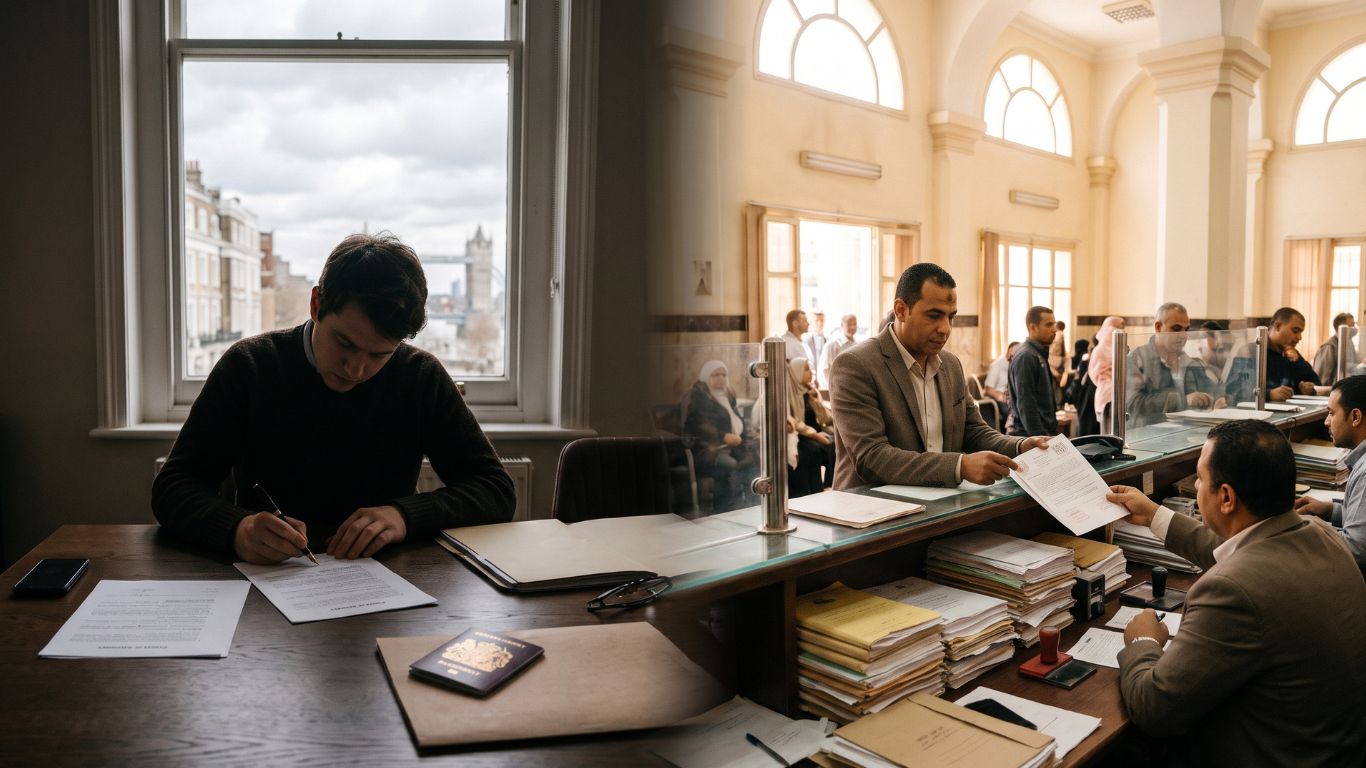
You can buy an apartment or villa on Egypt's Red Sea coast without flying out to sign. This guide explains how a power of attorney works, where to sign it, how it is legalised, and which limits protect you.
Many of our buyers live in Germany, the UK or Poland and cannot take several days off to be in Hurghada on the day the contract is signed. A power of attorney (in Arabic, tawkeel) solves that: you authorise a person you trust to sign for you in Egypt. Done properly, it is a normal, widely used route. Done loosely, it is one of the easiest ways to lose control of a purchase.
This guide walks through the process in the order you will meet it: deciding whether you need one, choosing the right type, signing it, getting it legalised, sending it to Egypt, and keeping it under control until the keys are in your hand. If you are still at the start of your search, read our step-by-step guide to buying property in Egypt as a foreigner first, then come back here.
One caution before we begin: consular and notary practice changes, and individual notaries and registration offices apply the rules with some variation. Where a fee, form or waiting time depends on the office, we say so rather than guess. Always confirm the current requirements with the embassy or consulate you will use and with the Egyptian lawyer handling the sale.
Do you actually need a power of attorney?
Not always. Before you arrange one, check what really has to happen in person. Most purchases involve four moments:
Reservation and first payment. Often possible by bank transfer to the developer's or owner's company account, with documents signed digitally or by courier.
Signing the sale contract. For off-plan purchases this is usually a developer contract you can sign yourself and post back. For resale it is a private contract between you and the seller.
Final transfer and registration. This is where Egyptian authorities, and often a notary, need either you or your authorised representative.
Handover of keys. You or someone you trust inspects the unit and signs the handover record.
If you can sign the developer contract remotely and are willing to travel once for handover, you may not need a power of attorney at all. If you want the whole process, including registration and handover, completed without travelling, you do.
General or special power of attorney?
This is the decision that matters most for your safety.
General power of attorney
A general power of attorney lets the agent act for you across a broad range of matters. In practice, Egyptian notaries and registration offices are cautious about broad authority in property sales, and many will not accept it for a purchase. Even if one is accepted, you would be handing someone wide control over your money and assets. We do not recommend it for a first purchase.
Special (specific) power of attorney
A special power of attorney is limited to one purpose: this property, from this seller, within this price. It is the type that notaries expect for a purchase, and it is the one that protects you. A good special power names:
your full name exactly as in your passport, passport number and address;
the attorney's full name and Egyptian national ID or passport details;
the property: project or building, unit number, floor, area in square metres and location;
the seller or developer;
a maximum purchase price and the currency;
the exact acts allowed: signing the sale contract, paying instalments, receiving documents, registering the sale, and taking delivery;
an expiry date.
Who should you appoint?
Choose the person with the most to lose if something goes wrong and the least to gain from cutting corners. The usual options are:
| Option | Advantages | Watch out for |
|---|---|---|
| An independent Egyptian lawyer | Understands registration, can check title, is professionally accountable | Agree the fee and scope in writing; do not use the seller's lawyer |
| A relative or friend living in Egypt | Trust and low cost | Little legal experience; personal liability if they make mistakes |
| The agency or developer | Convenient | Clear conflict of interest, because they are on the other side of the sale |
Avoid appointing the seller, the developer, or anyone paid by them. A power of attorney that allows the agent to contract with themselves, or to act for both sides, should be refused or tightly restricted. Ask your lawyer to state clearly in the text that the attorney may not buy the property for themselves or act for the seller.
Where to sign it
There are two usual routes, and which one is best depends on what the Egyptian notary or registration office will accept, so ask the lawyer in Egypt before you book anything.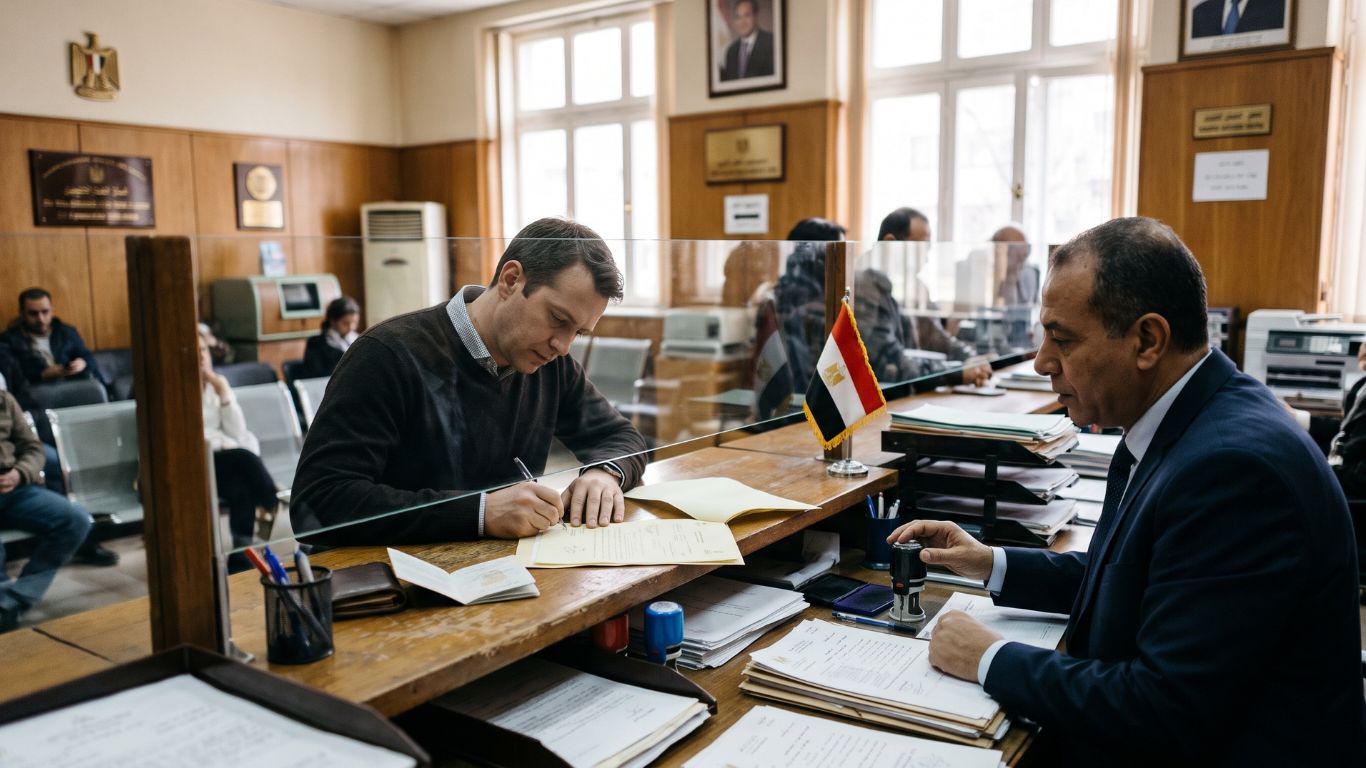
Route 1: sign at an Egyptian embassy or consulate
Egyptian embassies and consulates in countries such as Germany and the UK can process powers of attorney. You book an appointment, bring your passport and the agreed text, and sign in front of a consular officer. Because the document is issued by an Egyptian mission, it is generally the smoother route for use inside Egypt, and the Ministry of Foreign Affairs authenticates it on arrival. The Egyptian Ministry of Foreign Affairs lists its missions abroad, and the Egyptian Embassy in Berlin publishes its consular contact details for German-based buyers.
Practical points, based on how consular sections normally work:
Appointments are usually required; book early, as slots can be limited.
Fees are set by each mission and can change, so check before you go. Some sections accept payment only in specific ways.
Some consular services are described as being for Egyptian citizens. Confirm in writing that your mission will process a power of attorney for a foreign national before travelling to it.
Bring a text in Arabic, or in Arabic and English, agreed with your Egyptian lawyer in advance. The Arabic wording is what the Egyptian side relies on.
Route 2: sign before a local notary, then legalise
You can instead sign before a notary or solicitor in your own country and have the document legalised for use in Egypt. The chain normally runs: notary certification, then the government office that legalises notarial signatures in your country, then the Egyptian embassy. For the UK, GOV.UK explains the document legalisation service.
Whether a single apostille is enough or the full embassy step is still needed depends on whether Egypt and the country concerned treat each other's documents under the Hague Apostille Convention. Do not rely on a provider's website for this: check the current position in the official HCCH status table and ask the Egyptian embassy which stamp it requires. Legalisation services run by companies add speed, but their fees are their own and not official charges.
Translation and the Arabic text
The notary and the registration office work in Arabic. Plan for an Arabic version of the power of attorney, prepared or checked by a sworn or certified translator. Have your Egyptian lawyer draft the Arabic and check the English or German version against it, not the other way round. A small difference in a unit number or a price limit can stop the registration, so read the property details line by line.
Getting the original to Egypt
A scan or photograph is not enough for the transfer. Your attorney needs the original signed and legalised document. Send it by tracked international courier, agree the receiving address and name, and keep a full set of copies for yourself. Allow time: the consular appointment, any legalisation step and the courier can each add days or weeks, and the total depends on the offices involved. Start the process before the seller's deadline, not after it.
Limits to set so you stay in control
A power of attorney is only as safe as its limits. We suggest the following, and your lawyer can adapt them:
Property-specific. Name the unit, the project and the seller. No general wording such as "any property in Hurghada".
Price ceiling. State a maximum in euros or Egyptian pounds, and say the payments may go only to the seller's named company account.
No self-dealing. The attorney may not buy the property, borrow against it or transfer it to themselves or relatives.
No resale or mortgage powers unless you really want them.
Short validity. Set an expiry that matches the timetable of the purchase plus a reasonable margin, rather than leaving it open. Practices vary, and many buyers choose a period of months rather than years.
Reporting. Agree in a separate written letter that the attorney sends you copies of every document before signing and proof of every payment.
What your attorney should check before signing
Even with a good attorney, the work still has to be done properly. Before anything is signed or paid, the person acting for you should:
confirm the seller's ownership documents or the developer's right to sell the unit;
check that no mortgage, lien or dispute is registered against the property;
compare the contract with the offer, including payment schedule, delivery date and penalties for delay;
make sure payments go to the company account named in the contract, with receipts in your name;
register the sale with the competent real estate registration office, and send you proof of registration.
Our property scams checklist covers the red flags in more detail, and a verified agent from our agencies directory can introduce independent lawyers on request.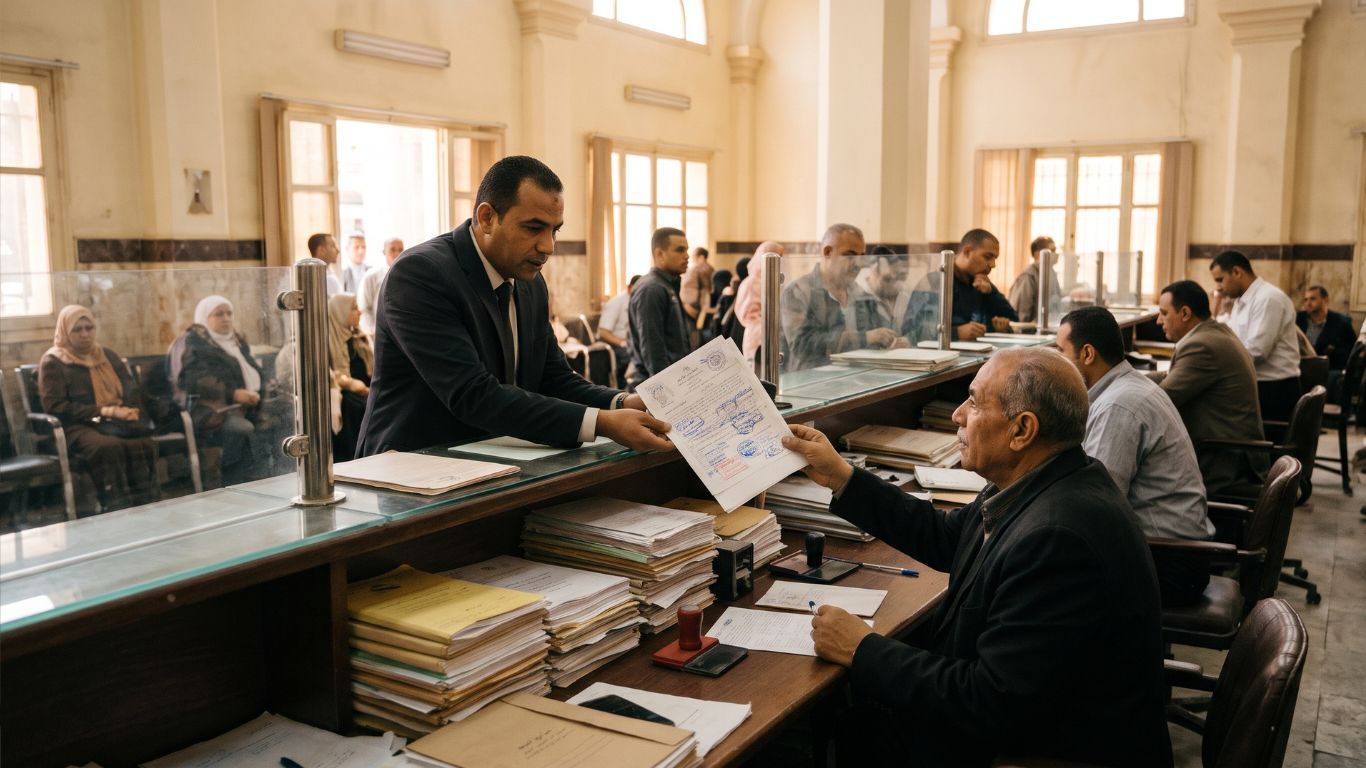
Using a power of attorney for off-plan purchases
If you are buying in a new development, much of the paperwork is done between you and the developer, and a power of attorney is often needed only for the final registration and handover. Look at the new developments available and read the developer's contract before deciding how much authority to give. Handover is a good moment to delegate carefully: your attorney can inspect the unit with a checklist and sign the handover minutes only if everything is in order.
After the purchase: managing or ending the power of attorney
Once the sale is registered and the keys are handed over, the purpose of the document has been served. Keep it alive only if you have a clear, limited reason. If you want someone to look after the property afterwards, our absentee property owner guide explains a separate, narrower arrangement.
To revoke a power of attorney, you generally do it in writing, at the mission where it was issued or before a notary in Egypt, and then you notify the attorney and anyone relying on the document, such as the developer and the registration office. Keep proof that they received the notice. Revocation cannot undo a contract the attorney has already validly signed within their authority, which is why the limits above matter.
Common mistakes
Signing a general power of attorney because it is quicker.
Appointing the seller's agent as your attorney.
Leaving the price, payee or unit number blank.
Not checking whether the notary or registration office accepts the version you plan to use.
Sending the document without tracking, and without keeping copies.
Forgetting to revoke the document when the purchase is complete.
A simple timeline
Choose the property and agree the reservation terms.
Appoint an independent Egyptian lawyer and ask what the notary and registration office will accept.
Draft the special power of attorney in Arabic and your language.
Book the consulate or notary appointment and sign.
Complete any legalisation step the chosen route needs.
Courier the original to your attorney and confirm receipt.
Attorney checks documents, signs, pays to the contract account, and registers the sale.
Attorney or you take delivery; revoke the power of attorney.
When you are ready to look at homes, start with our listings of properties for sale in Hurghada and narrow them down by budget and area.
Frequently asked questions
Can I buy property in Egypt without travelling there?
Yes, it is possible. Many buyers pay by bank transfer, sign the developer contract by courier and authorise a lawyer or trusted person with a special power of attorney to handle the registration and handover. How much can be done remotely depends on the seller and the registration office.
Should I sign a general or a special power of attorney?
A special power of attorney is the safer choice and is the type notaries normally expect for a purchase. It names the property, the seller, a maximum price and the specific acts allowed, and it has an expiry date.
Where can I sign a power of attorney for Egypt from Germany or the UK?
You can usually sign at an Egyptian embassy or consulate, or before a local notary and then have the document legalised. Which route is accepted depends on the Egyptian notary or registration office, and services for foreign nationals can differ between missions, so confirm in advance.
Does the power of attorney have to be in Arabic?
The Egyptian side works in Arabic, so you should have an Arabic version prepared or checked by a certified translator and drafted by your Egyptian lawyer. Check that unit numbers, names and price limits match exactly.
How do I cancel a power of attorney?
Revoke it in writing at the mission where it was issued or before a notary in Egypt, then notify the attorney, the developer or seller, and the registration office, and keep proof of delivery. Revocation does not undo a contract already signed within the attorney's authority.