Buying Land in Egypt | Build a Villa on the Red Sea
Can foreigners buy land and build a villa on Egypt’s Red Sea coast? Learn about ownership rules, permits, contractors, costs and self-build risks.
Every holiday has a Day Four. You are lying on a sunbed, the sea is behaving beautifully, and a small voice says: what if we just built our own place? A plot, a sketch on the back of a menu, a plunge pool shaped roughly like your initials. By Day Six the napkin has a floor plan on it. By Day Seven the voice has a name for the kitchen island.
It is a lovely daydream, and in Egypt it is not a silly one. But it is a different animal from buying a flat, and the honest answer to "is it realistic?" is: for some buyers, yes; for most, a finished or off-plan villa is cheaper in nerves, if not always in money. Let's walk through what the rules allow, where plots really come from, what the paperwork looks like, and what the build itself involves, so you can decide with your eyes open and your sunhat on.
The short answer
Foreigners can own land and houses on the Red Sea mainland, within limits. The land is usually the easier half of the project. The build is the main event: licences, a licensed Egyptian engineer, a contractor who has to be managed rather than trusted, and a budget that moves with the pound and the price of steel. If you want a bespoke home, enjoy projects, and have a flexible timeline, it can be wonderful. If you want to arrive, unpack and swim, buy a villa in El Gouna or an off-plan development in Sahl Hasheesh and let a developer carry the headaches.
What the law lets you own
Start with the numbers that frame everything. The Egyptian Real Estate Platform's guide for foreign buyers says the total area of ownership must not exceed 4,000 square metres, with a cap of two properties per foreign individual. The Rio Times, in a September 2026 explainer on buying in Egypt, notes that a 2023 cabinet decision (No. 3562) removed the cap on the number of units where the purchase is paid in foreign currency sent from abroad, but adds that the statute itself still reads two properties and 4,000 m2, so treat the old limits as live until a lawyer tells you otherwise.
Two more rules from the same Rio Times piece matter if you are eyeing bare land:
You have to build. A foreign owner of undeveloped land "must start building within five years of registration", according to the article. A plot you plan to sit on for a decade is not a plan.
You cannot flip it quickly. A foreigner may sell only five years after registering ownership, though the prime minister can consent to an exemption. Our guide to selling your Red Sea property covers how that works in practice, because sources do not fully agree on how it applies on the Red Sea coast.
Then there is what is off the table. Per the same article, agricultural land is closed to foreigners under Law 15 of 1963, Red Sea islands are closed to foreign buyers, and Sinai follows a separate regime. Desert land is covered by Law 143 of 1981, amended by Law 11 of 2024, and the article says a foreign investor may now own desert land "needed to run or expand a business" under the investment law. That is a business route, not a "plot for my retirement villa" route. Hurghada and El Gouna, the article says, sit on the Red Sea mainland under the ordinary rules.
Where plots actually come from
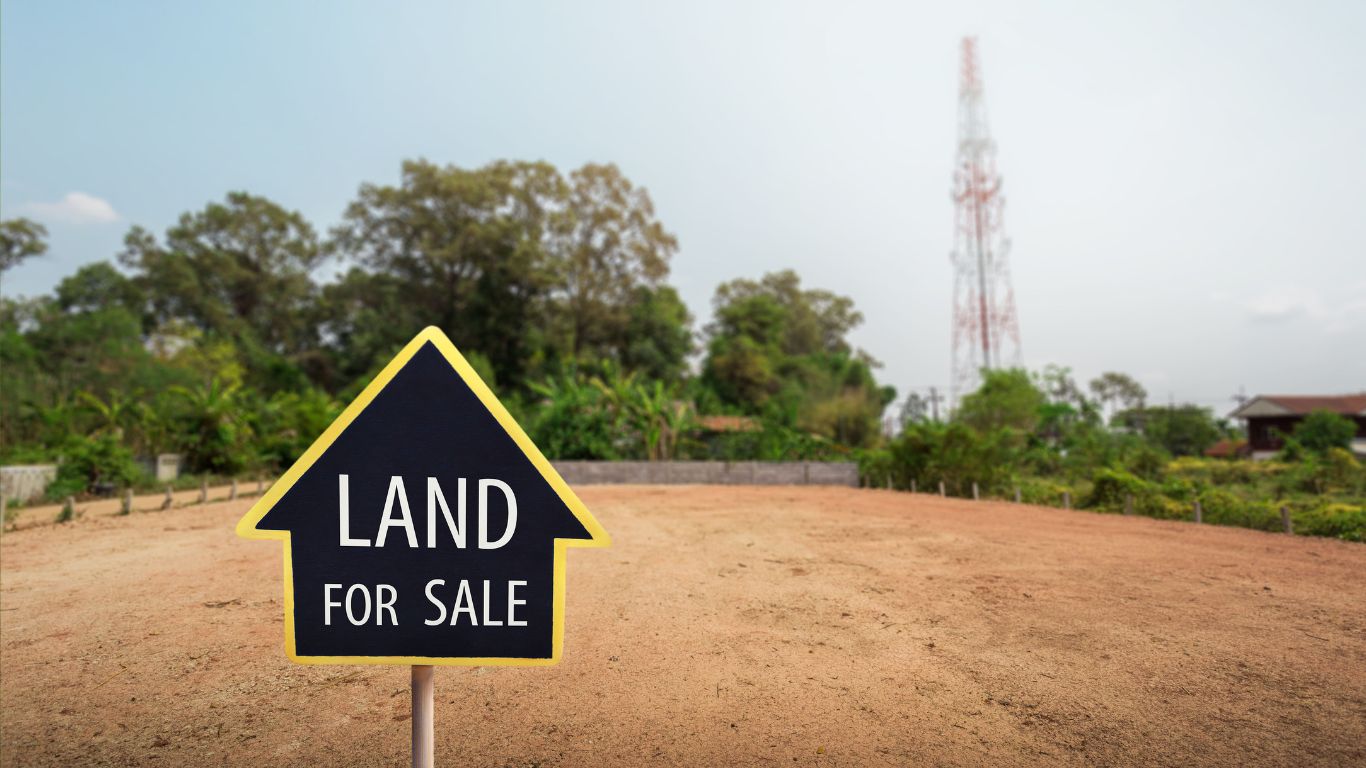
Here is the part that surprises people. On the Red Sea coast you rarely wander into a field, find a friendly farmer and shake hands. Land sits inside planned developments, and the master developer shapes the zoning, the design rules and the infrastructure. A guide from the El Gouna agency Gouna Realty says land there "typically sits within a planned framework", and that the position for bare land "can be more nuanced" than for a finished home, depending on land type, location, zoning and the developer's framework. The same page calls the build "the main event of the whole decision" and the land "the easier half". It also notes that the resort market is mostly cash and developer-instalment based, so a conventional mortgage is unlikely to fund a self-build. It is an agency page and gives no prices, so read it as a map of the questions, not as a price list.
Three things follow:
Ask who owns the land underneath. Some plots come with freehold title, others with a registered right of use. A Gouna Realty explainer says freehold exists in "certain villa plots where land title was granted directly to the original buyer", and that otherwise the buyer holds a registered right of use. Ask for the exact document that proves what you are getting.
Get the developer's approval separately. The Global Investments guide to renovating in Egypt (updated June 2026) is blunt: developer approval is separate from government permits, and you should "always obtain any required developer NOC before engaging contractors".
Be suspicious of loose plots. A law firm's briefing on Egyptian real estate, published on Mondaq in October 2026 by Andersen in Egypt, points to Article 18 of Building Law No. 119 of 2008: the plots of a subdivision project cannot be advertised or dealt in until the approving decree is provided to the authorities and the required deposit is shown. A seller who cannot show you that paper is not selling you a plot; he is selling you a story.
The paperwork: licence first, shovel second
Building in Egypt runs on Unified Building Law No. 119 of 2008. The Egyptian Real Estate Platform's guide to building permits in Egypt (published September 2025, modified April 2026) lays out the usual route:
The local administrative unit (city council or municipality) issues the permit, under the supervision of the housing and local development ministries.
Typical documents: proof of land ownership or lease, a site plan and drawings stamped by a licensed engineer, a zoning certificate, ID and tax registration, and the supervising engineer's syndicate membership. Larger buildings also need a soil test.
Processing usually takes 30 to 90 days, and an approved permit is generally valid for one year, so construction has to start in that window or the permit must be renewed.
Residential fees are generally EGP 10 to 100 per square metre, plus separate costs for engineering, soil testing and inspections.
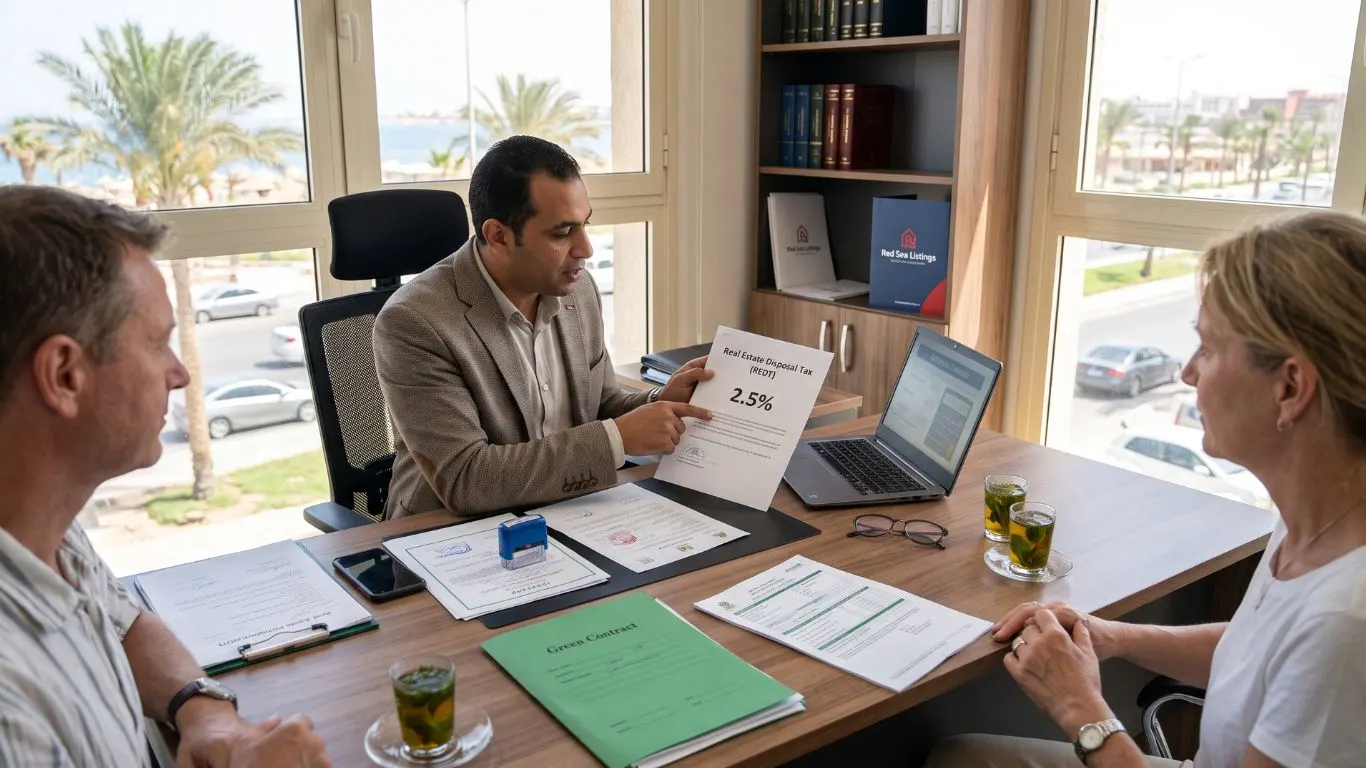
The same guide warns that unpermitted building is illegal and can lead to "heavy fines, forced demolition, or loss of ownership rights". The Andersen briefing adds that Article 39 of the same law bars building without a licence. And do not count on a later amnesty: according to the Real Estate Platform, reconciliation of building violations is not accepted for violations after the issuance of Law No. 187 of 2023. "We'll sort the paperwork out afterwards" is a sentence best left in the sunbed daydream.
What it might cost (and why nobody can tell you exactly)
Honesty time. We could not find a Red Sea-specific build-cost index, and nobody serious will quote you a final figure before there is a design, a plot and a contractor. What we did find is a headline figure from Knight Frank's Egypt construction overview (July 2025), which puts the upper limit for villas at US$1,310 per square metre, with apartments at US720toUS1,270. The release gives no lower bound and no method, so treat it as a ceiling, not a quote.
Line
What we know
Example for a 250 m2 villa
Land
Varies by development, view and title. We found no reliable public price list.
Ask three agents for real recent sales
Building cost
Knight Frank: villas up to US$1,310 per m2 (upper limit, July 2025)
Up to about US$327,500 (our arithmetic: 250 x 1,310)
Permit fees
EGP 10 to 100 per m2 (Egyptian Real Estate Platform)
About EGP 2,500 to 25,000 (our arithmetic)
Design, engineer, soil test, inspections
Separate costs; no figures found
Get written quotes
Connections, pool, landscaping, furniture
Not in a per-m2 headline; usually extra
Budget separately
Contingency
Currency and materials risk (Global Investments)
Our rule of thumb: add a cushion and hold it in your own currency
Global Investments adds a useful warning: currency risk applies to imported materials, so settle specifications and order long-lead items early, and hold your contingency in your funding currency. Over-specifying, it says, is the costliest mistake. In plain English: do not build the best house on the street if your neighbours' houses are all worth less than yours.
The contractor question
This is where holiday dreams meet Tuesday morning. According to the same Global Investments guide, expect a contractor to ask for 30 to 40 per cent upfront for materials, then stage payments, and aim to hold back 10 to 15 per cent until defects are cleared. The work should be overseen by a licensed Egyptian engineer whose Syndicate of Engineers registration you have checked, and everything should sit in a written contract covering scope, materials, timeline, payments and defects liability, ideally reviewed by an Egyptian lawyer. Referrals beat adverts, and developer-controlled communities may have approved contractor lists.
Our own advice, and it is ours, not from any source: tie each payment to a stage your engineer has signed off, photograph everything, and visit in person (or send someone who is not related to the contractor) before each release. You would not pay a restaurant before the food arrived. A villa is a very large lunch.
Plot and build, off-plan, or finished villa?
This table is our own reading of the trade-offs, not survey data:
Plot and self-build
Off-plan villa
Finished or resale villa
Control over design
Highest
Limited choices
None, but you can see it
Who manages the build
You, via an engineer
The developer
Already done
Paperwork you handle
Land title, licence, developer NOC
Contract, developer checks
Title and registration
Financing
Mostly cash; mortgages unlikely
Often instalment plans
Cash or sometimes instalments
Time to first swim
Longest, and no source gave a build duration
Waiting for handover
Shortest
If you like the instalment route, our guide to off-plan developments explains how the payment plans work, and the buying walkthrough covers the purchase from contract to keys.
Seven questions before you fall for a plot
Can you show me the land title, and is it freehold or a registered right of use?
Is the plot inside an approved development, and can I see the approving paperwork?
What does the master developer require: design rules, a no-objection certificate, fees, a deadline to start?
Who is my licensed engineer, and is his syndicate registration current?
What will the contract say about stage payments, retention and defects?
Does my total budget survive a 15 per cent move in the pound and a rough year for steel?
Do I have the time, or someone I trust on the ground, to supervise it?
If seven answers come back clean, you may have found your plot. If two come back as "don't worry about it", worry about it.
The verdict
Is it realistic? Yes, if you have patience, a real budget with a cushion, and people on the ground you trust. It is not the cheap route to a villa, and it is certainly not the lazy one. For plenty of buyers, the smartest "build your own" is to choose a villa, adjust the finishes and let the developer do the lifting.
Either way, start by seeing what is already there. Browse homes in Hurghada, compare Sahl Hasheesh and Soma Bay, and message a verified agent directly on WhatsApp with the one sentence that matters: "I'm thinking of building. What would you do?" Buyers use Red Sea Listings for free, with zero commission, and the sea will still be there when your floor plan is finished.