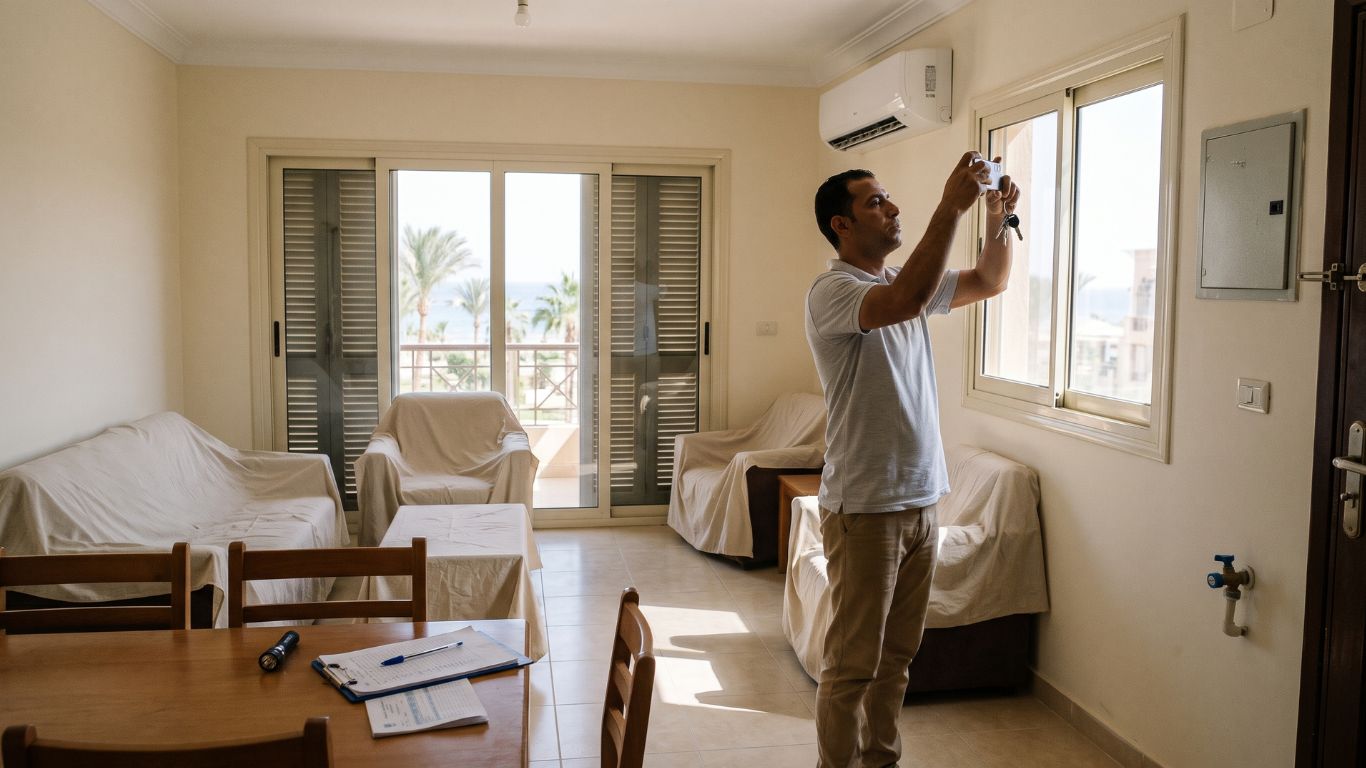
Selling Property in Egypt | Resale Rules & 2.5% Tax
A practical guide to selling property in Hurghada and Egypt’s Red Sea region, covering resale restrictions, off-plan assignments, the 2.5% disposition tax, pricing, paperwork, finding a buyer and transferring sale proceeds abroad.
Buying a flat by the Red Sea is the fun bit. There are brochures, sunsets, and a salesperson who somehow knows exactly how you take your coffee. Selling it is the other half of the story, and nobody has ever thrown a party in a notary's office. The good news is that selling is far less scary than it sounds, as long as you know three things before you list: whether you are allowed to sell yet, what the tax man will take, and how the money gets home. Get those right and the rest is just viewings and small talk.
This guide walks you through all of it, from the first rule you need to check to the day the cash lands in your own bank account. It pairs nicely with our walkthrough on buying property in Egypt as a foreigner, because the paperwork you collected on the way in is exactly what you need on the way out.
Step one: can you actually sell yet?
Let's start with the awkward rule. According to The Rio Times, a foreigner "may also sell only five years after registering ownership", and the clock runs from registration, not from the day you signed the contract. The same piece notes that the prime minister can consent to an exemption. The Real Estate Registry's own guide for foreign buyers is softer in tone: it says the buyer may not sell for five years after purchase "in some cases", without spelling out which cases.
So which is it? Older legal commentary, including Al Tamimi & Company's overview of Law 230 of 1996 and the 2005 prime ministerial resolution, described the Red Sea governorate as one of the areas exempt from the resale restriction. That commentary is several years old, so treat it as a strong hint rather than a green light. Before you sign anything with a buyer, ask your Egyptian lawyer to confirm in writing whether your specific unit, in your specific compound, is free to be resold today. It is a ten-minute question that can save you a very bad month.
A second point that catches people out: you can only sell what is properly yours. The Registry's guidance is blunt that a property is "not legally yours until registered", and it says final registration can take 3 to 12 months. If you bought a few years ago and never finished registering, do that first. A buyer's lawyer will ask for the registered title, and "I have a contract and a very nice letter from the developer" is not a title.
Still off-plan? You are selling a contract, not a flat
If you are still paying instalments, you do not own a finished property yet. You hold a purchase contract, and selling it is usually called an assignment. A resale guide from Gouna Realty puts it plainly: the developer is often "a party to whether and how it happens", and a transfer the developer has not properly recorded "may not protect either party".
In practice that means checking three things: whether your contract allows assignment at all, whether the developer needs to consent, and what fees the developer charges to update the paperwork. We have not found published fee scales, and they differ from one developer to the next, so ask for the number in writing. Our off-plan explainer covers how those payment plans work, and the same logic applies in reverse: the new buyer takes over your remaining instalments, so the more transparent the schedule, the faster the sale.
The tax: 2.5% of the price, not of the profit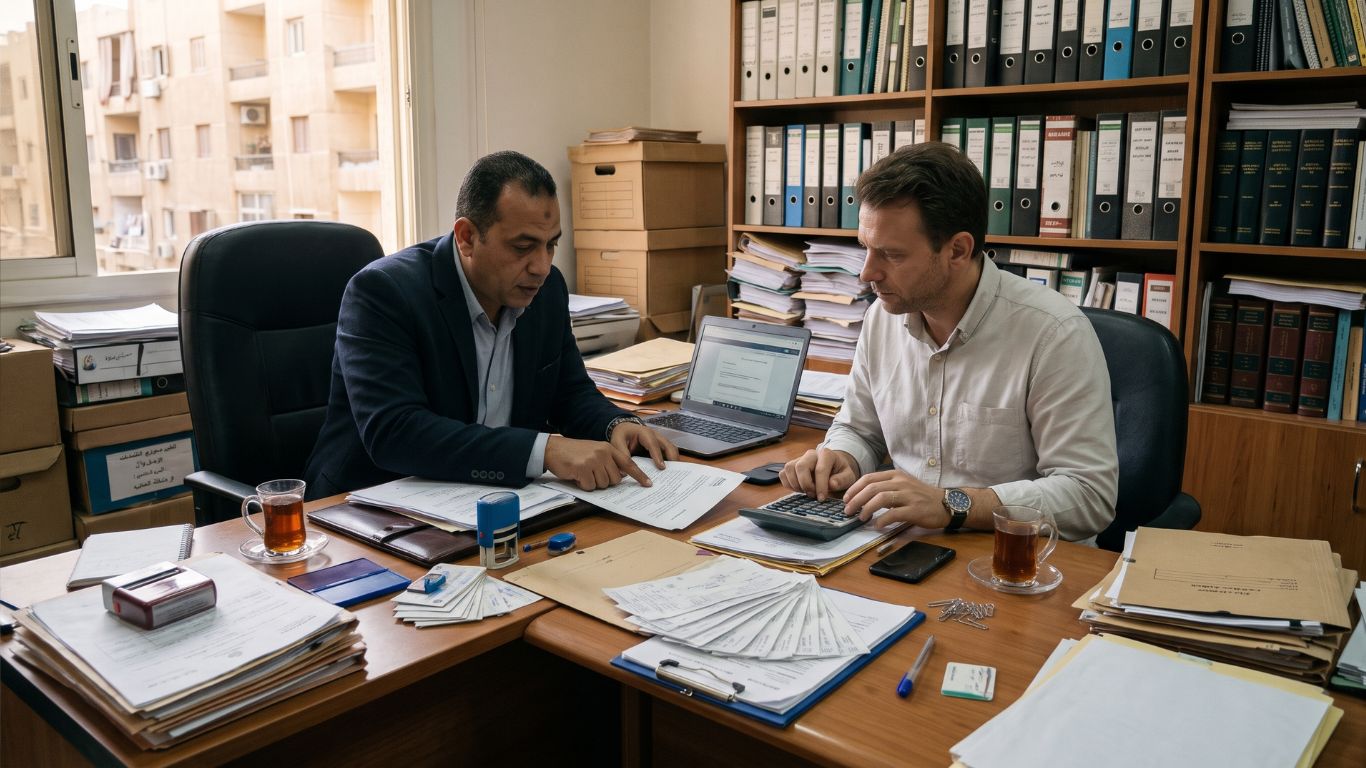
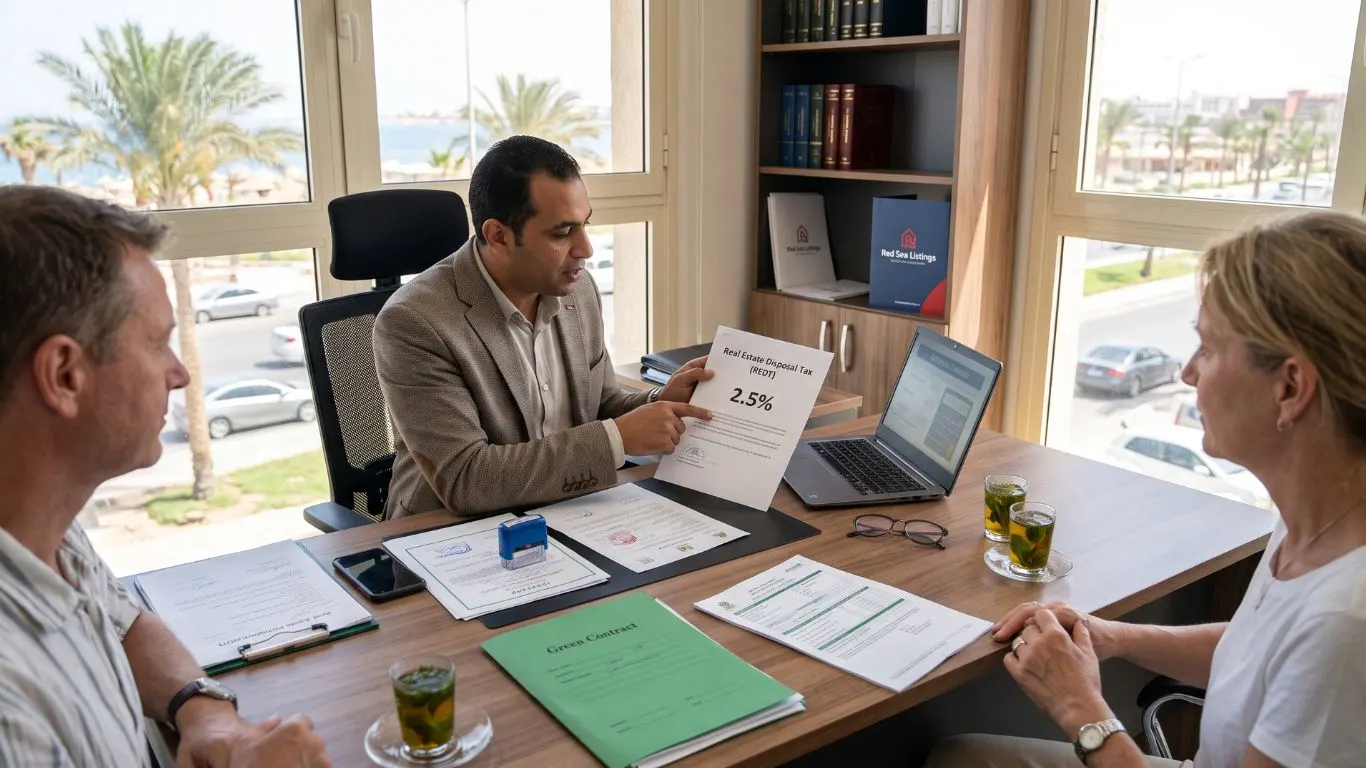
This is the bit that makes sellers sit up. Egypt charges a real estate disposition tax of 2.5%, and it is levied on the whole sale price rather than on your gain. The Rio Times says so in as many words, and Global Investments (page updated June 2026) adds that it applies even if you sell at a loss. The seller pays. Andersen's overview of the rules, which trace back to Law No. 5 of 2021, says payment is due within 30 days of the disposition, with a fine for late payment tied to the Central Bank of Egypt's rate. Global Investments describes it as withheld at registration through the Real Estate Tax Authority, so in practice you will see it collected as part of the sale rather than chased afterwards.
Did the rate change? Egypt's finance minister Ahmed Kouchouk told developers in December 2025 that the tax remains at 2.5 percent, with a mobile app planned to simplify payment. Still, rules in this area move, so confirm the current figure when you accept an offer.
There are exemptions, but they are narrow. Andersen's list includes transfers by will, donation or gift to spouses, parents and children, and compulsory sales. A normal sale to an unrelated buyer does not qualify.
What it looks like in numbers
Here is a worked example. It is illustrative and ours, not a quote. Say you bought a flat for EGP 3,000,000 and sell it for EGP 4,000,000. The seller's agent fee is assumed at 2.5%, the midpoint of the 2% to 3% range quoted by Global Property Guide. Conversions use the 30Rates mid-market rates of 19 October 2026 (1 EUR = 60.24 EGP, 1 GBP = 71.74 EGP) and roughly 52 EGP to the dollar, as reported by The Rio Times.
Item
EGP
Approx. GBP
Sale price
4,000,000
55,800
Disposition tax, 2.5% of the price
100,000
1,390
Agent fee, assumed 2.5%
100,000
1,390
You keep, before legal fees and any home-country tax
3,800,000
53,000
Notice what the tax does to your profit. Your gain was EGP 1,000,000, and the 2.5% bite is EGP 100,000, which is a tenth of that gain. If instead you sold at EGP 2,800,000, a loss of EGP 200,000, the tax would still be EGP 70,000. Nobody enjoys paying tax on a loss, but at least it is simple arithmetic.
Your home country may want a word
Global Investments warns that if you are tax-resident somewhere that taxes capital gains on overseas property, you may owe tax at home on any gain, and the Egyptian 2.5% may not be directly creditable against it, depending on the treaty. Rules vary hugely between the UK, Italy, Czechia, Germany and the rest, so book a short chat with an accountant in the country where you live before you accept an offer, not after.
Pricing it without crying later
Owners tend to price with their hearts. You remember the lovely mornings on the balcony, the buyer sees a service charge and a staircase. Start with evidence instead. Check what comparable units in your own compound or neighbourhood are actually listed for, and remember that asking prices are hopes while sold prices are facts. Bayut, Property Finder and Aqarmap all show live asking prices, and our own Hurghada listings, Sahl Hasheesh listings and El Gouna listings give you a feel for the going rate by area.
Three honest adjustments help. First, compare like with like: floor, view, finishing and whether the unit is furnished. Second, remember that the 2.5% tax and agent fee come off your side, so decide your walk-away price net of costs, not before them. Third, if your unit was bought off a developer's launch price, do not assume the resale market will pay the launch price plus inflation. Sometimes it does, sometimes it pays less. A valuation from a local appraiser, which Expat Focus suggests as a first step, costs little compared with a six-month listing that sits at the wrong number.
The paperwork pack
Buyers, and especially buyers' lawyers, love a tidy folder. Gather it before the first viewing and you look like a serious seller. At minimum you want your registered title or registration receipt, your passport, the sales contract you signed when you bought, proof of payment of every instalment, and the developer's confirmation that you owe nothing. Add recent service charge and utility receipts. We would also ask the compound management for a written statement that your service charges are paid up, since an unpaid balance is the classic last-minute surprise. That last item is general advice from us, not a legal requirement we have found, so check whether your compound issues one.
Keep the bank paperwork for how the money came in. We will come back to that, because it matters more than most sellers realise.
Finding a buyer
The Red Sea buyer pool is wide: Europeans after winter sun, Gulf investors, Egyptians moving from Cairo, and the occasional remote worker who has fallen for the marina. Your job is to be easy to find and easy to say yes to.
Good photos do more than any clever description. Shoot in daylight, tidy the balcony, and show the view, because the view is what people are buying. Mention the things buyers search for: distance to the beach and the airport, whether the unit is furnished, service charges, and whether it has a licence for short lets. If your flat earns money as a holiday rental, include your real booking history, because a flat with proof of income sells faster than one with promises.
On Red Sea Listings, buyers and renters use the platform for free, agencies and developers are KYC verified, and every ad has a direct WhatsApp line, so you can speak to serious enquiries without a middleman in the way. If you work with an agent instead, agree the fee in writing before viewings start; Global Property Guide puts the seller's agent fee at 2% to 3%, but treat that as a guide, not a rule.
Vet your buyer as carefully as they vet you. Insist on bank transfers, never cash, and be wary of anyone in a rush or anyone proposing an "informal" arrangement. Our anti-scam checklist works from the seller's side too. And if your buyer is foreign, remember what the Rio Times reports about Circular 41: since 26 March 2024, foreign buyers must show the price was paid from abroad, in foreign currency, through a bank authorised by the Central Bank of Egypt. A buyer who cannot do that is a buyer with a problem, and a problem you do not want to inherit.
Getting the money out
This is the question I would ask first if I were in your shoes. The short version is that proceeds can generally leave Egypt, but only with a paper trail. The Real Estate Registry guide says repatriation of funds such as profits from selling the property is "generally allowed", subject to Central Bank of Egypt rules, and that you must be able to show evidence of the source of funds.
The Rio Times is more specific. It advises asking your Egyptian bank for a written certificate of the inward transfer when you buy, and keeping it, because that certificate is what lets you take sale proceeds out again in hard currency. Investment Law 72 of 2017 guarantees the transfer of invested funds abroad through banks registered with the central bank, but the article warns the guarantee "is only as good as the paperwork behind it". Money that came in outside the banking system, it adds, can only be repatriated in Egyptian pounds at whatever rate applies on the day.
So dig out the bank certificate before you list. If you cannot find it, ask your Egyptian bank what they can reissue, and raise it with your lawyer early. It is much easier to fix in month one than in month six. For the full story on the way in, see our guide to sending money to Egypt to buy property.
A realistic timeline
Here is our own rough estimate, not an official schedule, assuming your title is already registered:
Weeks 1 to 2: confirm the resale rule with your lawyer, collect the paperwork, find your bank certificate, settle on a price.
Weeks 2 to 4: photos, listing, first viewings, first offers. Remote viewings by video call work well for foreign buyers.
Weeks 4 to 8: negotiation, preliminary agreement, deposit paid by bank transfer, buyer's lawyer checks the title.
Weeks 8 to 12: final contract, registration, payment of the 2.5% tax, transfer of the balance.
After completion: request the bank documents you need to send the proceeds home, then tell your home tax office what they need to know.
A property that is still off-plan, or one with an unregistered title, will take longer. Plan for patience, and hold your nerve if the first offer is cheeky; the first offer almost always is.
Your seller's checklist
Before you list, run through this list once. Has your lawyer confirmed in writing that the unit can be resold now? Is the title registered, or if off-plan, does your contract allow assignment and what will the developer charge? Do you have the inward-transfer certificate from your bank? Have you priced the unit using comparable listings and decided your walk-away figure net of the 2.5% tax and agent fee? Have you spoken to an accountant at home about any tax on the gain? And do you have a clean folder of documents ready to hand over?
Tick those off and selling stops being a mystery and becomes a to-do list. If you are ready to take the next step, list your property on Red Sea Listings and let verified buyers come to you. The sea will still be here when you have finished the paperwork, and so will we.