Property Tax and Running Costs in Egypt: 2026 Guide
A practical breakdown of the yearly costs of owning property in Egypt, including real estate tax, compound service charges, utilities, repairs, insurance, rental tax and selling costs.
Bveuying a flat on the Red Sea feels like the hard part. You' picked the compound, haggled over the price, wired the money and signed the contract. Then you wake up in your new place, make a coffee, and quietly wonder: what is this thing actually going to cost me every year?
Good question. Better asked before you sign than after. The honest answer is that owning on the Red Sea is rarely expensive, but it isn't free, and a few of the bills have moved recently. One of them has a deadline in about ten weeks that could save you 25%. So, kettle on, here is the full, boring-but-useful list of what lands in your lap once the keys are yours.
Good question. Better asked before you sign than after. The honest answer is that owning on the Red Sea is rarely expensive, but it isn't free, and a few of the bills have moved recently. One of them has a deadline in about ten weeks that could save you 25%. So, kettle on, here is the full, boring-but-useful list of what lands in your lap once the keys are yours.
The big picture first
For a typical Red Sea flat, think of four yearly buckets: the real estate tax, the compound service charge, utilities, and repairs and insurance. We'll work through each one, and then add them up for a worked example. If you've read our rental yield reality check, you'll recognise the same cost assumptions, so the numbers here fit together with the ones there. And if you're still at the stage of budgeting for the purchase itself, our step-by-step guide to buying as a foreigner covers the one-off fees.
1. Real estate tax: smaller than you fear, with a new discount
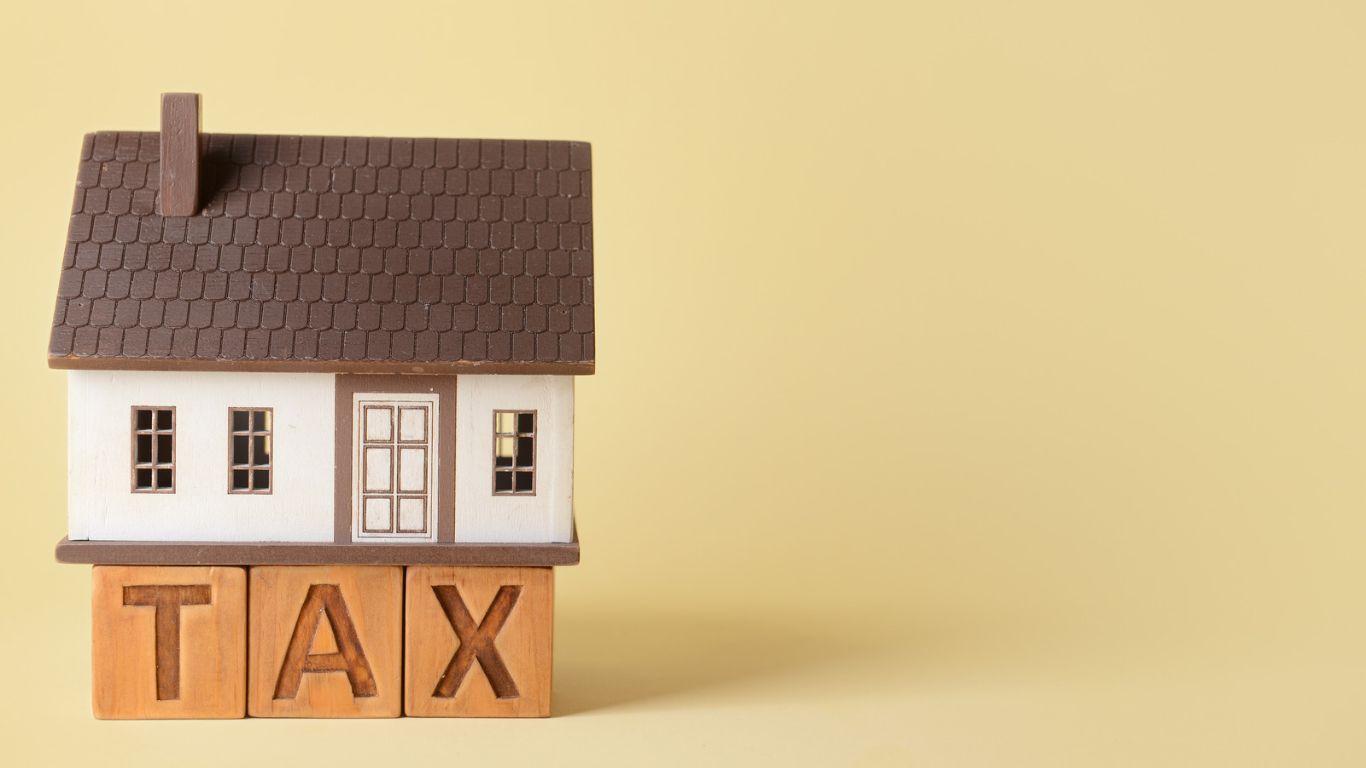
Egypt taxes built property every year, and the owner is the one who pays. According to the Andersen Egypt property tax guide, the rate is 10% of the net annual rental value, and that net value is the gross rental value minus a 30% deduction for residential property (32% for non-residential), which stands in for maintenance and management costs.
The word that matters there is rental value. It isn't the price you paid. It's the value the tax authority assigns to the unit, which is usually a lot lower than the market price. So a flat that cost EGP 3,000,000 doesn't get taxed at 10% of three million. Thank goodness.
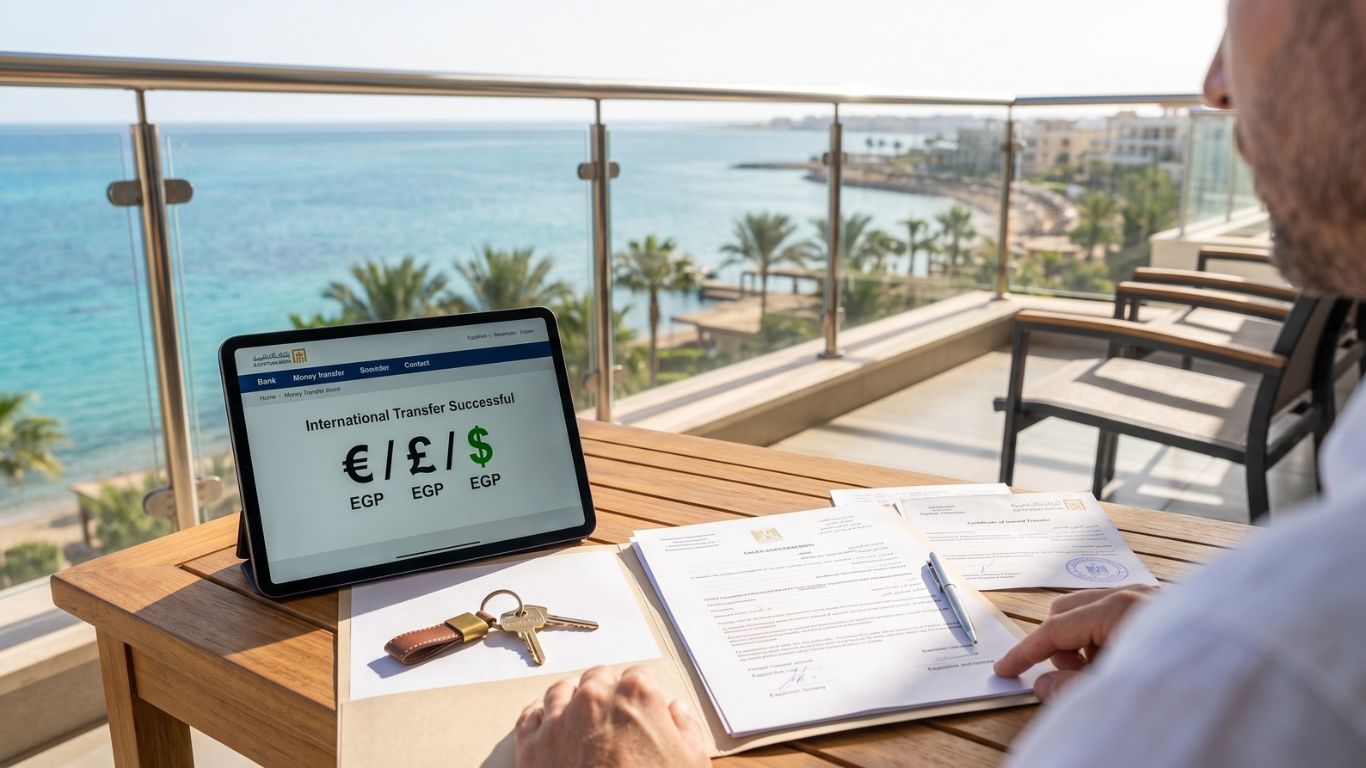
Here's an illustration, and please treat it as exactly that: suppose the authority assesses your flat at an annual rental value of EGP 120,000. Knock off 30% and you have EGP 84,000. Ten per cent of that is EGP 8,400 a year, which is about £117, €139 or $162. That's a figure to plan with, not one to quote to the tax office.
What changed in 2026
This is the interesting bit. Parliament approved amendments in March 2026, and the President ratified them as Law No. 3 of 2026. The Real Estate Registry's own summary of the changes, dated 19 August 2026, lists the main ones: the exemption for a principal residence rises to a net annual rental value of EGP 100,000 (which the authority says corresponds to a property worth up to about EGP 8 million), late-payment charges are capped so they can't exceed the original tax debt, and a timely declaration earns a 25% reduction for residential property.
Now the deadline. Reporting on a statement by Finance Minister Ahmed Kouchouk, Ahram Online reported on 3 October 2026 that the 25% discount applies to declarations filed through the real estate tax mobile app by the end of December 2026, with a further 5% off for small advance payments of EGP 200 to EGP 1,000 depending on the unit type. The same piece says around 2.5 million units have already been registered on the app. Disputes before appeal committees or courts can be settled by paying 70% of the tax due until 2 April 2027.
Two honest caveats. First, the principal-residence exemption is for, well, your principal residence. If your Red Sea flat is a winter bolt-hole or a rental, don't assume it qualifies: ask your accountant how the authority treats second homes and holiday lets before you plan around it. Second, the sources we found don't agree on every figure (one popular explainer mixes older and newer thresholds), so the Registry's page and the Ministry of Finance are the ones to trust.
2. The compound service charge: the one that really varies
If your flat is inside a compound or resort, which most holiday and investment flats are, you pay for the shared life of the place: security, landscaping, pools, lifts, cleaning of common areas, and sometimes beach or gym access. This is the line in your budget that varies most between developments, so it deserves a proper look.
One Egyptian property portal, Nawy, published a guide on 15 October 2026 that splits it in two. First, a one-off deposit (often called the wadiaa or sinking fund) of around 8% to 10% of the purchase price, usually paid in instalments before handover. Second, an annual service charge of around 2% to 5% of the unit's price, billed monthly or quarterly. It's a marketing blog and the page doesn't name a source for the percentages, so read them as a ceiling for premium, heavily serviced compounds rather than a rule.
The picture from other sources is gentler. In the retirement guide we've leaned on before, Global Investments puts compound and service charges for a property in the El Gouna area at roughly USD 2,000 to USD 6,000 a year. Against a EGP 3,000,000 flat (about USD 57,700) that would be anywhere from 3.5% to 10% a year, a very wide band that overlaps with Nawy's range at the low end and blows past it at the top. Our own planning figure of EGP 30,000 (about USD 577, or 1%) is far lower than both, which tells you something: the number swings enormously by compound and by unit size. The takeaway isn't to trust any single figure. It's to ask for the actual charge per square metre, in writing, before you buy.
Four questions to put to any developer or management company:
What is the current annual service charge per square metre, and what did it do in the last three years?
Is the sinking-fund deposit separate, how much is it, and when is it due?
What exactly is included: pool, beach, gym, shuttle, cable internet?
What happens if I rent the flat out, and does the management company charge extra for access or registration?
Our working assumption for the example below is EGP 30,000 a year, which is the same figure we used in the yield article. Treat it as a mid-range planning number for a decent compound, nothing more.
3. Utilities: the air-conditioning tax
Electricity is where summer sends its invoice. According to Egypt Independent, reporting on 9 July 2026, the household bands now run like this: 68 piastres per kWh for the first 50 kWh, 78 piastres for 51 to 100, 95 piastres for 101 to 200, EGP 1.55 for 201 to 350, EGP 1.95 for 351 to 650, EGP 2.10 for 651 to 1,000, and EGP 2.58 above 1,000 kWh. Only the top band went up this time; the rest were left unchanged.
What that means in practice: a flat you only use at weekends sits comfortably in the cheap bands. A flat with two air-conditioners running all August climbs into the EGP 1.55 to EGP 1.95 bands quickly. If the whole month's consumption were billed at the top rate of a band, 600 kWh would cost about EGP 1,170 at most, around £16, €19 or $22. The source doesn't say whether the rates apply to the whole consumption or slice by slice, so take that as an upper limit. Add water, internet (we'll say about EGP 400 to EGP 600 a month, our estimate) and the odd gas bottle, and EGP 24,000 a year is a sensible, slightly cautious budget for a lived-in one-bedroom flat.
Many resort compounds bill utilities through the developer at their own rates. That is our general market impression rather than a sourced rule, so ask the question: who reads my meter, and what do I pay per unit?
4. Repairs, insurance and the "it's the Red Sea" tax
Salt air, sun and sand are lovely for the holiday photos and hard on door handles, balcony railings and air-conditioning units. We budget EGP 15,000 a year for repairs, furniture wear and contents insurance. In a good year you spend half. In the year the water heater and a split unit both give up, you spend more. Averaged out, it's a fair number, and it's the same one we use in our holiday rentals maths.
Putting it together: a EGP 3,000,000 flat
Here is the worked example. Every figure is illustrative, built from the assumptions above and converted at the rates from 30Rates on 19 October 2026 (1 EUR = 60.24 EGP, 1 GBP = 71.74 EGP) and roughly EGP 52 to the dollar, the level The Rio Times quoted in late September.
Yearly cost
EGP
About (GBP)
Real estate tax (illustrative, after the 25% discount: EGP 8,400 less 25%)
6,300
£88
Compound service charge (our planning figure)
30,000
£418
Utilities: electricity, water, internet (our estimate)
24,000
£335
Repairs, wear and insurance (our estimate)
15,000
£209
Total per year
75,300
about £1,050
That is roughly 2.5% of the purchase price a year, or about EGP 6,275 a month (£87, €104 or $121). Without the discount the tax line is EGP 8,400 and the total rises to EGP 77,400, which doesn't change the picture much. In euros the yearly total is about €1,250, and in dollars about $1,450.
For perspective, that is what a couple might spend on a few weekend breaks, and it's the cost of owning a place in the sun for twelve months. It is also why the gross-versus-net gap in our 12.4% yield analysis matters so much: if you let the flat, these are exactly the costs that sit between the headline number and your bank account.
The costs people forget
A few items that don't appear in a tidy table but do appear in real life:
The disposal tax when you sell. Egypt charges 2.5% of the total sale price, not of the profit. Nawy's April 2026 explainer on the tax changes confirms the 2.5% of the full sale value, and the Mondaq briefing from Youssry Saleh & Partners (1 September 2026) also mentions the 2.5% disposition tax. Build it into your exit plan from day one.
Income tax on rent. If you let the flat, the rent is taxable income. We haven't verified how short holiday lets are treated compared with long lets, so this is a conversation for an Egyptian accountant, preferably before your first guest arrives.
Furnishing and replacement. Beds, sofas and mattresses age quickly in a humid, salty climate. Budget a refresh every few years.
Management fees. If you hand the flat to an agent, expect a percentage of income. We used 20% in the yield article.
Currency. Your costs are in Egyptian pounds and your income may not be. A weaker pound makes the running costs look tiny in euros, and a stronger one makes them look less so.
How to keep the bills tidy
Ask for every annual figure in writing before you pay a deposit. Register the unit on the real estate tax app before the end of December if the 25% reduction applies to you. Keep a folder, paper or digital, of every receipt and certificate; it is dull right up to the moment it saves you a dispute. And if you want a second pair of eyes on a particular compound, the listings for Sahl Hasheesh, El Gouna and Hurghada show the developer, the unit and the payment plan, so you can compare service charges like for like.
So, is it worth it?
On the numbers above, owning a one-bedroom Red Sea flat costs a little over £1,000 a year to run. That's a coffee-a-day habit in London. The sun, the sea and a front door that's yours come with it. The trick is simply knowing the figure before you commit, not discovering it in a letter six months later.
Ready to run the numbers on a real place? Browse properties for sale on the Red Sea and ask the seller for the service charge up front. We'll happily point you at the ones that answer straight away.